


- Retrait en 2 heures
- Assortiment impressionnant
- Paiement sécurisé
- Toujours un magasin près de chez vous
- Retrait gratuit dans votre magasin Club
- 7.000.0000 titres dans notre catalogue
- Payer en toute sécurité
- Toujours un magasin près de chez vous


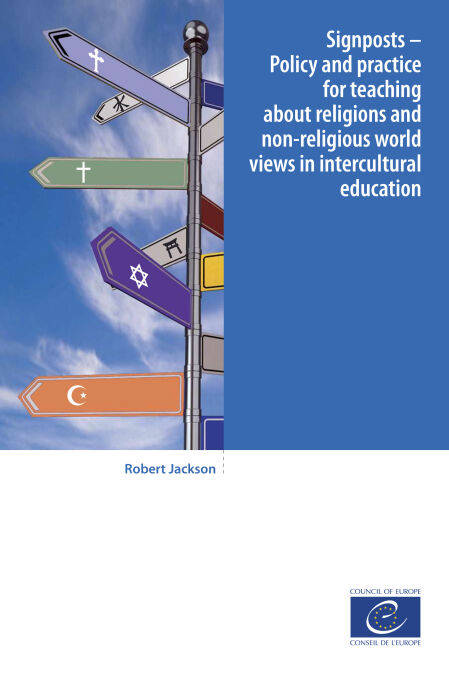
Signposts - Policy and practice for teaching about religions and non-religious world views in intercultural education EBOOK
Robert Jackson
Ebook | Anglais
9,49 €
+ 9 points
Format
Description
How can the study of religions and non-religious world views contribute to intercultural education in schools in Europe? An important recommendation from the Committee of Ministers of the Council of Europe (Recommendation CM/Rec(2008)12 on the dimension of religions and non-religious convictions within intercultural education) aimed to explain the nature and objectives of this form of education.
Signposts goes much further by providing advice to policy makers, schools (including teachers, senior managers and governors) and teacher trainers on tackling issues arising from the recommendation. Taking careful account of feedback from education officials, teachers and teacher trainers in Council of Europe member states, Signposts gives advice, for example, on clarifying the terms used in this form of education; developing competences for teaching and learning, and working with different didactical approaches; creating “safe space” for moderated student-to-student dialogue in the classroom; helping students to analyse media representations of religions; discussing non-religious world views alongside religious perspectives; handling human rights issues relating to religion and belief; and linking schools (including schools of different types) to one another and to wider communities and organisations. Signposts is not a curriculum or a policy statement. It aims to give policy makers, schools and teacher trainers in the Council of Europe member states, as well as others who wish to use it, the tools to work through the issues arising from interpretation of the recommendation to meet the needs of individual countries.
Signposts results from the work of an international panel of experts convened jointly by the Council of Europe and the European Wergeland Centre, and is written on the group’s behalf by Professor Robert Jackson.
Signposts goes much further by providing advice to policy makers, schools (including teachers, senior managers and governors) and teacher trainers on tackling issues arising from the recommendation. Taking careful account of feedback from education officials, teachers and teacher trainers in Council of Europe member states, Signposts gives advice, for example, on clarifying the terms used in this form of education; developing competences for teaching and learning, and working with different didactical approaches; creating “safe space” for moderated student-to-student dialogue in the classroom; helping students to analyse media representations of religions; discussing non-religious world views alongside religious perspectives; handling human rights issues relating to religion and belief; and linking schools (including schools of different types) to one another and to wider communities and organisations. Signposts is not a curriculum or a policy statement. It aims to give policy makers, schools and teacher trainers in the Council of Europe member states, as well as others who wish to use it, the tools to work through the issues arising from interpretation of the recommendation to meet the needs of individual countries.
Signposts results from the work of an international panel of experts convened jointly by the Council of Europe and the European Wergeland Centre, and is written on the group’s behalf by Professor Robert Jackson.
Spécifications
Parties prenantes
- Auteur(s) :
- Editeur:
Contenu
- Langue:
- Anglais
Caractéristiques
- EAN:
- 9789287180063
- Date de parution :
- 31-07-14
- Format:
- Ebook
- Protection digitale:
- /
- Format numérique:
- ePub


Seulement chez Librairie Club
+ 9 points sur votre carte client de Librairie Club
Cadeau

Cadeau


Les avis
Nous publions uniquement les avis qui respectent les conditions requises. Consultez nos conditions pour les avis.