


- Retrait en 2 heures
- Assortiment impressionnant
- Paiement sécurisé
- Toujours un magasin près de chez vous
- Retrait en 2 heures
- Assortiment impressionnant
- Paiement sécurisé
- Toujours un magasin près de chez vous



34,95 €
+ 69 points
Description
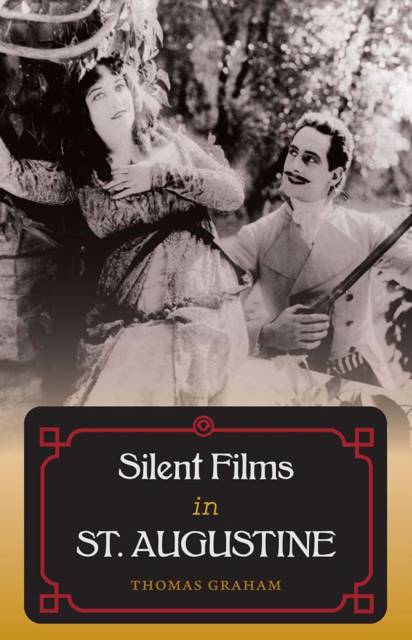
"This absorbing tale, documenting the forgotten history of early moviemaking in St. Augustine, is a must-read for film enthusiasts."-Janelle Blankenship, coeditor of European Visions: Small Cinemas in Transition "Very few people have any idea that St. Augustine played any role in early film history. This book brings St. Augustine into a much larger film conversation."-Christina Lane, author of Magnolia "This richly detailed book tells the story of early filmmakers' adventures in St. Augustine and captures the excitement of their moviemaking escapades."-Kathryn Fuller-Seeley, coauthor of One Thousand Nights at the Movies: An Illustrated History of Motion Pictures, 1895-1915 "Given that the great majority of these early films are now lost, Graham makes an important contribution to the study of Florida's image on film."-Jan-Christopher Horak, author of Saul Bass: Anatomy of Film Design "The 'reel' history of Florida and its contribution to the development of American film history has been left out of mainstream textbooks and accounts. Thomas Graham's book is a link in the chain of that history and an important addition to film scholarship."-Susan Doll, coauthor of Florida on Film: The Essential Guide to Sunshine State Cinema and Locations "Through entertaining stories of how St. Augustine lured studios and enriched filmmaking with Henry Flagler's railroad and architecture, Graham adds new detail to our understanding of the silent film era."-Rita Reagan, Norman Studios Silent Film Museum Before Hollywood, when America's rising motion picture industry was based on the East Coast, early film stars like Rudolph Valentino, Thomas Meighan, Ethel Barrymore, and Oliver Hardy made movies in St. Augustine, Florida. Silent Films in St. Augustine tells stories of the leading film producers and actors who escaped New York winters-and kept the studio doors open-in St. Augustine's sunshine and warm weather. Scenes for more than 120 films were made in St. Augustine from 1906 to 1926 by film companies including Thanhouser, Lubin, Éclair, Pathé, Edison, Vitagraph, and Paramount. The first feature-length Frankenstein movie, Life Without Soul, was partly shot in St. Augustine. Theda Bara became a "vamp" sensation for her role in A Fool There Was. Sidney Drew acted in the genderbending A Florida Enchantment. Noted directors Edwin S. Porter, Maurice Tourneur, and George Fitzmaurice also set up shop in the beach town. Filmmakers used St. Augustine's striking architecture to create backdrops for movies set in exotic foreign locales. The famous Castillo de San Marcos, the stone houses on the narrow streets, and Henry Flagler's Spanish Renaissance palace hotels were reimagined as Spain, Italy, France, Egypt, Arabia, South Africa, Brazil, and Hawaii. Residents of St. Augustine loved seeing film teams in action on their streets and would gather around the camera to watch the actors and marvel at the outlandish costumes. Cast as extras in larger productions, locals packed theater houses to catch a glimpse of themselves and their neighbors on the screen. Describing the lavish sets, theatrical action, and New York movie personalities that filled St. Augustine, Thomas Graham evokes an intensely creative time and place in the history of American moviemaking.
Spécifications
Parties prenantes
- Auteur(s) :
- Editeur:
Contenu
- Nombre de pages :
- 216
- Langue:
- Anglais
Caractéristiques
- EAN:
- 9780813054537
- Date de parution :
- 05-09-17
- Format:
- Livre relié
- Format numérique:
- Genaaid
- Dimensions :
- 155 mm x 231 mm
- Poids :
- 430 g


Seulement chez Librairie Club
+ 69 points sur votre carte client de Librairie Club
Cadeau


Les avis
Nous publions uniquement les avis qui respectent les conditions requises. Consultez nos conditions pour les avis.