


- Retrait en 2 heures
- Assortiment impressionnant
- Paiement sécurisé
- Toujours un magasin près de chez vous
- Retrait en 2 heures
- Assortiment impressionnant
- Paiement sécurisé
- Toujours un magasin près de chez vous



38,45 €
+ 76 points
Description
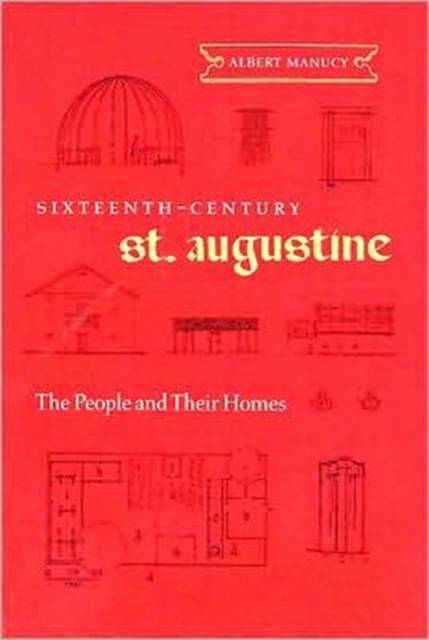
"Greatly enriches our knowledge of Spanish Florida. . . . Describes the sixteenth-century Native American and European occupants of St. Augustine, the circumstances which brought them together, and the city, fortifications, and houses in which they dwelt. Nothing else like this has been written. . . . Enlarges substantially upon the cultural meaning of people, place, and hearth."--Eugene Lyon, director, Center for Historic Research, Flagler College, St. Augustine "[The] first and only comprehensive historical and anthropological synthesis of America's first European colony . . . and a great story. There are very few scholars who can achieve this kind of precisely accurate, broadly synthetic, and wonderfully readable book."--Kathleen Deagan, curator of anthropology, Florida Museum of Natural History, Gainesville In this companion volume to TheHouses of St. Augustine, 1565 to 1821, Albert Manucy goes back in time to detail the first years of St. Augustine's settlement, from 1565 to 1700. Focusing on how the first Spanish colonists lived, Manucy describes the buildings and backyards of the early settlers and illustrates how the architecture of the Timucua Indians of Florida influenced Spanish colonial culture. Though the description of early St. Augustine is necessarily hypothetical, since all of the early structures were burned by Sir Thomas Moore in 1702, Manucy incorporates a broad range of scholarship in architecture, art, history, and ethnohistory to establish a provocative, convincing, and fascinating model of early colonial life. For years the leading architectural interpreter of St. Augustine and formerly a historian of the Castillo de San Marcos, a Fulbright scholar in Spain, and a member of the St. Augustine 1580 research team, Albert Manucy combines his expertise with a true gift for story telling. Richly illustrated and straightforwardly narrated, Sixteenth-Century St. Augustine will appeal to anyone interested in Florida history, particularly in the early Spanish settlers of St. Augustine and the Timucuan Indians. It will also prove an invaluable resource for archaeologists, architects, enthnohistorians, museum curators, and scholars of Spanish colonial history. Albert Manucy is author of The Houses of St. Augustine, 1565-1821; Florida's Menéndez; Artillery Through the Ages; and The Building of the Castillo de San Marcos.
Spécifications
Parties prenantes
- Auteur(s) :
- Editeur:
Contenu
- Nombre de pages :
- 175
- Langue:
- Anglais
Caractéristiques
- EAN:
- 9780813032764
- Date de parution :
- 01-03-08
- Format:
- Livre broché
- Format numérique:
- Trade paperback (VS)
- Dimensions :
- 155 mm x 223 mm
- Poids :
- 281 g


Seulement chez Librairie Club
+ 76 points sur votre carte client de Librairie Club
Cadeau


Les avis
Nous publions uniquement les avis qui respectent les conditions requises. Consultez nos conditions pour les avis.