


- Retrait en 2 heures
- Assortiment impressionnant
- Paiement sécurisé
- Toujours un magasin près de chez vous
- Retrait gratuit dans votre magasin Club
- 7.000.0000 titres dans notre catalogue
- Payer en toute sécurité
- Toujours un magasin près de chez vous



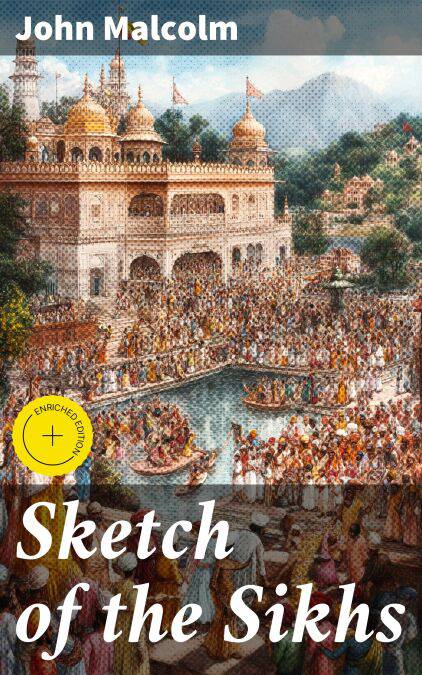
Sketch of the Sikhs EBOOK
Enriched edition. A Singular Nation Who Inhabit the Provinces of Penjab, Situated Between the Rivers Jumna and Indus
John Malcolm
Ebook | Anglais
0,49 €
Format
Description
In "Sketch of the Sikhs," John Malcolm delivers a compelling exploration of the Sikh community within the historical context of early 19th-century India. Drawing on rich descriptive language and direct observations, Malcolm presents a nuanced depiction of Sikh customs, beliefs, and sociopolitical dynamics during a transformative era. His work serves as both an anthropological study and a historical account, capturing the vibrancy of Sikh culture while contextualizing it against the backdrop of British colonialism and regional politics. The narrative is infused with Malcolm's personal reflections, providing a unique lens through which readers can appreciate the complexities of Sikh identity and history. John Malcolm, a British soldier and administrator, spent considerable time in India, allowing him to gain firsthand insights into its diverse cultures. His deep respect for the Sikh people and his experiences as a colonial officer inform his writing, imbuing it with authenticity and depth. Malcolm's intention is to foster understanding between cultures, utilizing his position to bridge the divide between the British and the Sikh community, thereby establishing a narrative that emphasizes shared humanity amid colonial tensions. This book is essential reading for those interested in the dynamics of colonial India, Sikh history, and cross-cultural interactions. Malcolm's eloquent prose, combined with his meticulous observations, makes "Sketch of the Sikhs" not only an informative text but also a poignant reflection on identity, belonging, and cultural exchange, which resonates with contemporary discussions on multiculturalism.
In this enriched edition, we have carefully created added value for your reading experience:
- A succinct Introduction situates the work's timeless appeal and themes.
- The Synopsis outlines the central plot, highlighting key developments without spoiling critical twists.
- A detailed Historical Context immerses you in the era's events and influences that shaped the writing.
- A thorough Analysis dissects symbols, motifs, and character arcs to unearth underlying meanings.
- Reflection questions prompt you to engage personally with the work's messages, connecting them to modern life.
- Hand‐picked Memorable Quotes shine a spotlight on moments of literary brilliance.
- Interactive footnotes clarify unusual references, historical allusions, and archaic phrases for an effortless, more informed read.
In this enriched edition, we have carefully created added value for your reading experience:
- A succinct Introduction situates the work's timeless appeal and themes.
- The Synopsis outlines the central plot, highlighting key developments without spoiling critical twists.
- A detailed Historical Context immerses you in the era's events and influences that shaped the writing.
- A thorough Analysis dissects symbols, motifs, and character arcs to unearth underlying meanings.
- Reflection questions prompt you to engage personally with the work's messages, connecting them to modern life.
- Hand‐picked Memorable Quotes shine a spotlight on moments of literary brilliance.
- Interactive footnotes clarify unusual references, historical allusions, and archaic phrases for an effortless, more informed read.
Spécifications
Parties prenantes
- Auteur(s) :
- Editeur:
Contenu
- Nombre de pages :
- 197
- Langue:
- Anglais
Caractéristiques
- EAN:
- 4057664590336
- Date de parution :
- 28-11-19
- Format:
- Ebook
- Protection digitale:
- Digital watermarking
- Format numérique:
- ePub



Seulement chez Librairie Club
Cadeau

Cadeau


Les avis
Nous publions uniquement les avis qui respectent les conditions requises. Consultez nos conditions pour les avis.