


- Retrait en 2 heures
- Assortiment impressionnant
- Paiement sécurisé
- Toujours un magasin près de chez vous
- Retrait gratuit dans votre magasin Club
- 7.000.0000 titres dans notre catalogue
- Payer en toute sécurité
- Toujours un magasin près de chez vous



27,95 €
+ 55 points
Description
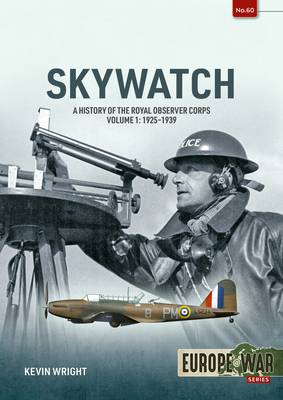
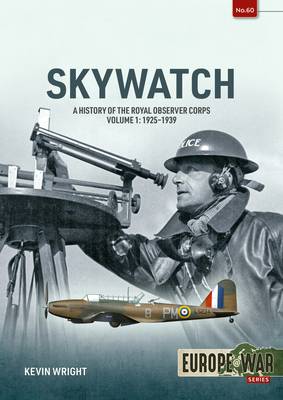
Traces the origins and early development of the Royal Observer Corps in Britain from 1925 to 1939.
For much of the twentieth century, the Royal Observer Corps served an important role in monitoring the skies above Great Britain and providing warning of potential enemy air attacks against cities, industry and military installations alike. Skywatch provides a history of the ROC from its establishment in 1925 through to its stand down in the 1990s with the end of the Cold War. Volume 1 of Skywatch examines the early years of this organisation up to the outbreak of the Second World War in 1939.
During the First World War, London was vulnerable to air attacks by Zeppelins and later, German bombers. To defend the capital, the London Air Defence Area was created to coordinate the efforts to protect it. However, after 1918, the system was quickly abandoned.
In the early 1920s, the Committee for Imperial Defence began to reconsider the problem. In 1924, the first experiment was conducted to monitor and report the movement of aircraft overland by using small groups of aircraft observers reporting to a central point. This successful experiment led to the creation of the Observer Corps in 1925 under the control of Police Chief Constables.
Originally intended to cover just the South East of England to protect London, as the threat from resurgent Nazi Germany grew, the Corps was gradually expanded to cover nearly the whole of Great Britain by the start of the war. Now transferred to the control of the Air Ministry, Observer Corps Groups became a key part of Fighter Command's integrated air defence system, unique in that it was the only means to track the movement of aircraft once they crossed the coast and headed inland.
Using a combination of new research and access to official files, Volume 1 of Skywatch charts the development of the Observer Corps from its origins, the very beginnings, formation and growth through the 1920s. It critically examines how, in the rush to prepare for war in the late 1930s, the Observer Corps began to ready itself for war and its unique role, monitoring the skies of Britain.
Skywatch: A History of the Royal Observer Corps Volume 1: 1925-1939, richly illustrated with original photographs and the @War series' distinctive colour artworks, offers a compelling account of the Corps' origins and early development. It will appeal to readers interested in British military history, air defence, interwar Britain, and the wider story of how the nation prepared for the challenges of modern warfare.
For much of the twentieth century, the Royal Observer Corps served an important role in monitoring the skies above Great Britain and providing warning of potential enemy air attacks against cities, industry and military installations alike. Skywatch provides a history of the ROC from its establishment in 1925 through to its stand down in the 1990s with the end of the Cold War. Volume 1 of Skywatch examines the early years of this organisation up to the outbreak of the Second World War in 1939.
During the First World War, London was vulnerable to air attacks by Zeppelins and later, German bombers. To defend the capital, the London Air Defence Area was created to coordinate the efforts to protect it. However, after 1918, the system was quickly abandoned.
In the early 1920s, the Committee for Imperial Defence began to reconsider the problem. In 1924, the first experiment was conducted to monitor and report the movement of aircraft overland by using small groups of aircraft observers reporting to a central point. This successful experiment led to the creation of the Observer Corps in 1925 under the control of Police Chief Constables.
Originally intended to cover just the South East of England to protect London, as the threat from resurgent Nazi Germany grew, the Corps was gradually expanded to cover nearly the whole of Great Britain by the start of the war. Now transferred to the control of the Air Ministry, Observer Corps Groups became a key part of Fighter Command's integrated air defence system, unique in that it was the only means to track the movement of aircraft once they crossed the coast and headed inland.
Using a combination of new research and access to official files, Volume 1 of Skywatch charts the development of the Observer Corps from its origins, the very beginnings, formation and growth through the 1920s. It critically examines how, in the rush to prepare for war in the late 1930s, the Observer Corps began to ready itself for war and its unique role, monitoring the skies of Britain.
Skywatch: A History of the Royal Observer Corps Volume 1: 1925-1939, richly illustrated with original photographs and the @War series' distinctive colour artworks, offers a compelling account of the Corps' origins and early development. It will appeal to readers interested in British military history, air defence, interwar Britain, and the wider story of how the nation prepared for the challenges of modern warfare.
Spécifications
Parties prenantes
- Auteur(s) :
- Editeur:
Contenu
- Nombre de pages :
- 78
- Langue:
- Anglais
- Collection :
Caractéristiques
- EAN:
- 9781804519332
- Date de parution :
- 30-04-26
- Format:
- Livre broché
- Format numérique:
- Trade paperback (VS)
- Dimensions :
- 210 mm x 298 mm
- Poids :
- 322 g


Seulement chez Librairie Club
+ 55 points sur votre carte client de Librairie Club
Cadeau

Cadeau


Les avis
Nous publions uniquement les avis qui respectent les conditions requises. Consultez nos conditions pour les avis.