


- Retrait en 2 heures
- Assortiment impressionnant
- Paiement sécurisé
- Toujours un magasin près de chez vous
- Retrait en 2 heures
- Assortiment impressionnant
- Paiement sécurisé
- Toujours un magasin près de chez vous



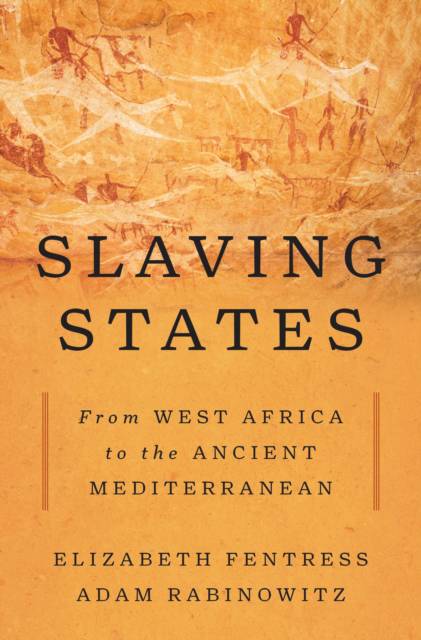
Slaving States
From West Africa to the Ancient Mediterranean
Elizabeth Fentress, Adam Rabinowitz
Livre relié | Anglais
54,45 €
+ 108 points
Description
A pathbreaking new perspective on the ways ancient societies were shaped and transformed by slave trading
The growing economies of ancient Greece and Rome created an ever-increasing demand for enslaved labor, which was supplied by states on the peripheries of their empires. In Slaving States, archaeologists Elizabeth Fentress and Adam Rabinowitz examine how violent bands of warriors in the outlying regions of Gaul, Scythia, and the Fezzan (part of modern-day Libya) gradually became states that specialized in selling humans to the slave economies of Greece and Rome. They trace a series of transformations--of people into objects that could be bought and sold, of warrior bands into state-level societies, and of opportunistic captive-taking into slaving economies. Fentress and Rabinowitz use as a model the West African state of Dahomey, whose development into a slaving state between the seventeenth and nineteenth centuries is, unlike that of their ancient counterparts, well documented. Drawing on textual and archaeological evidence, they show that the slaving zones of early modern West Africa and of antiquity have much in common, rooted in the structure of slaving itself. The evolution of the ancient warriors of Gaul, Scythia, and the Fezzan from head-takers to slave merchants may have taken different paths, but it is clearly written in their histories. With Slaving States, Fentress and Rabinowitz offer an entirely new perspective on ancient slavery. By exploring the supply side of the market for enslaved people, they show that that slavery transforms the society that supplies enslaved people as much as it transforms the society that uses them.Spécifications
Parties prenantes
- Auteur(s) :
- Editeur:
Contenu
- Nombre de pages :
- 424
- Langue:
- Anglais
Caractéristiques
- EAN:
- 9780691288062
- Date de parution :
- 25-08-26
- Format:
- Livre relié
- Format numérique:
- Genaaid
- Dimensions :
- 155 mm x 235 mm



Seulement chez Librairie Club
+ 108 points sur votre carte client de Librairie Club
Cadeau


Les avis
Nous publions uniquement les avis qui respectent les conditions requises. Consultez nos conditions pour les avis.