


- Retrait en 2 heures
- Assortiment impressionnant
- Paiement sécurisé
- Toujours un magasin près de chez vous
- Retrait gratuit dans votre magasin Club
- 7.000.0000 titres dans notre catalogue
- Payer en toute sécurité
- Toujours un magasin près de chez vous



Description
How people make decisions, size up situations, spot anomalies, and anticipate problems in real-world settings.
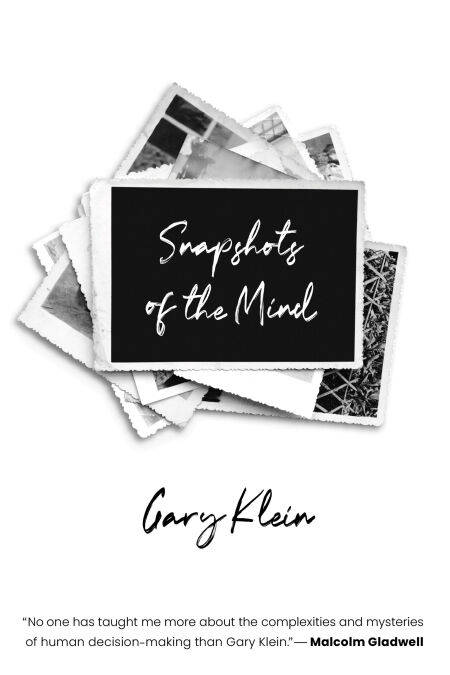
Gary Klein, author of the bestselling Sources of Power, is the cognitive psychologist who discovered how people actually make decisions, particularly under time pressure and uncertainty. In Snapshots of the Mind, he offers a set of short essays—“snapshots” of different aspects of cognitive functioning in real-world settings that will help us learn to recognize the cognitive processes that underlie and drive performance. In these essays Klein provides practical tools for escaping fixation on initial hunches and learning to detect the ways that people make decisions, size up situations, spot anomalies, and anticipate problems.
Snapshots of the Mind grows out of the Naturalistic Decision Making movement, which studies how decision makers handle uncertainty and complexity in high-stakes situations. In the essays, Klein examines how people make tough choices and assessments in the real-world, discussing such topics as training, information technology, teamwork, expertise, and insights. Debunking the idea that artificial intelligence will soon take over human decision making, he argues instead for machines that make us smarter and expand our expertise. He describes his Recognition-Primed Decision (RPD) model, which has been incorporated into Army doctrine and was one of the inspirations for Malcolm Gladwell’s Blink. Snapshots of the Mind offers fresh takes on such topics as confirmation bias, anomaly detection, intuition, anticipatory thinking and perspective-taking. Readers come away attuned to the primary aspects of expert cognition: the mindsets, mental models, and perceptual sensitivity.
Gary Klein, author of the bestselling Sources of Power, is the cognitive psychologist who discovered how people actually make decisions, particularly under time pressure and uncertainty. In Snapshots of the Mind, he offers a set of short essays—“snapshots” of different aspects of cognitive functioning in real-world settings that will help us learn to recognize the cognitive processes that underlie and drive performance. In these essays Klein provides practical tools for escaping fixation on initial hunches and learning to detect the ways that people make decisions, size up situations, spot anomalies, and anticipate problems.
Snapshots of the Mind grows out of the Naturalistic Decision Making movement, which studies how decision makers handle uncertainty and complexity in high-stakes situations. In the essays, Klein examines how people make tough choices and assessments in the real-world, discussing such topics as training, information technology, teamwork, expertise, and insights. Debunking the idea that artificial intelligence will soon take over human decision making, he argues instead for machines that make us smarter and expand our expertise. He describes his Recognition-Primed Decision (RPD) model, which has been incorporated into Army doctrine and was one of the inspirations for Malcolm Gladwell’s Blink. Snapshots of the Mind offers fresh takes on such topics as confirmation bias, anomaly detection, intuition, anticipatory thinking and perspective-taking. Readers come away attuned to the primary aspects of expert cognition: the mindsets, mental models, and perceptual sensitivity.
Spécifications
Parties prenantes
- Auteur(s) :
- Editeur:
Contenu
- Nombre de pages :
- 448
- Langue:
- Anglais
Caractéristiques
- EAN:
- 9780262371520
- Date de parution :
- 17-10-22
- Format:
- Ebook
- Protection digitale:
- Adobe DRM
- Format numérique:
- ePub


Seulement chez Librairie Club
+ 29 points sur votre carte client de Librairie Club
Cadeau

Cadeau


Les avis
Nous publions uniquement les avis qui respectent les conditions requises. Consultez nos conditions pour les avis.