


- Retrait en 2 heures
- Assortiment impressionnant
- Paiement sécurisé
- Toujours un magasin près de chez vous
- Retrait en 2 heures
- Assortiment impressionnant
- Paiement sécurisé
- Toujours un magasin près de chez vous



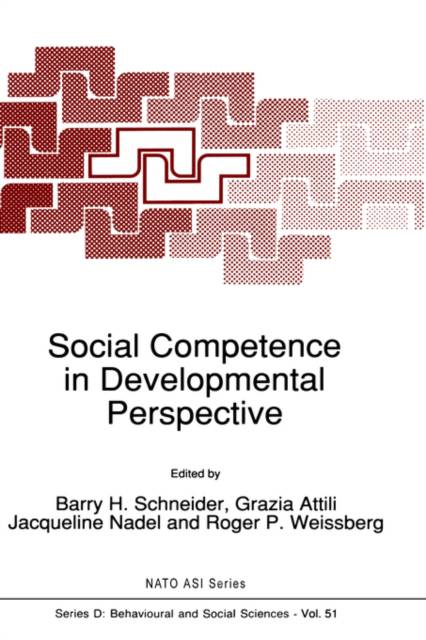
Social Competence in Developmental Perspective
503,95 €
+ 1007 points
Description
What determines the focus of a researcher's interest, the sources of inspiration for a study, or the variables scrutinized? If we were to examine the antecedents of these decisions, they would surely emerge as accidents of circumstance--the personal experiences of the researcher, the inspiration of early mentors, the influence of contemporary colleagues--all tempered by the intellectual currents that nurture the researcher's hypotheses. Among the accidents that mold the careers of researchers is geographic location. The culture in which a research program emerges helps determine both its very subject and its method. The primary purpose of this book is to assist those interested in the scientific study of children's social competence in transcending the boundaries imposed both by geography and by selective exposure to the highly diverse schools of thought that have led to interest in this field. Most of these ideas were presented and exchanged at an Advanced Study Institute entitled "Social Competence in Developmental Perspective" held in Savoie, France, in July 1988. This Institute was attended by scholars from France, England, Northern Ireland, Germany, Italy, Norway, Spain, Portugal, Netherlands, Canada, the United States and Brazil. Those who participated will recognize that the metamorphosis from lecture to chapter has necessitated many changes. In order to accommodate the reader who may be unfamiliar with the field, more attention has been paid here to identifying the theoretical contexts of the research described.
Spécifications
Parties prenantes
- Editeur:
Contenu
- Nombre de pages :
- 420
- Langue:
- Anglais
- Collection :
- Tome:
- n° 51
Caractéristiques
- EAN:
- 9780792304005
- Date de parution :
- 31-08-89
- Format:
- Livre relié
- Format numérique:
- Genaaid
- Dimensions :
- 156 mm x 234 mm
- Poids :
- 793 g

Seulement chez Librairie Club
+ 1007 points sur votre carte client de Librairie Club
Cadeau


Les avis
Nous publions uniquement les avis qui respectent les conditions requises. Consultez nos conditions pour les avis.