


- Retrait en 2 heures
- Assortiment impressionnant
- Paiement sécurisé
- Toujours un magasin près de chez vous
- Retrait gratuit dans votre magasin Club
- 7.000.0000 titres dans notre catalogue
- Payer en toute sécurité
- Toujours un magasin près de chez vous



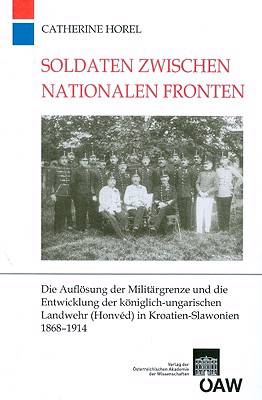
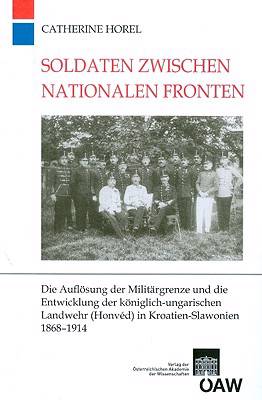
Soldaten Zwischen Nationalen Fronten
Die Auflosung Der Militargrenze Und Die Entwicklung Der Koniglich-Ungarischen Landwehr (Honved) in Kroatien-Slawonien 1868-1914
Catherine Horel
Livre broché | Allemand
91,95 €
+ 183 points
Description
English summary: The Hungarian Defence Force (Honved) was created after the conclusion of the Austro-Hungarian Compromise in 1867 and the subsequent reforms of the armed forces. While the Honved gradually became a Hungarian national army, its Croatian units developed a distinctly national-Croatian character. Despite its being part of the common Austrian-Hungarian Armed Forces, for Hungary an independent army was a central aspect of its national identity. For Croatia, the primary national demand was territorial, namely the reunification of Croatia-Slavonia with Austrian Dalmatia and the Military Border. Here, the Croatian units of the Honved played a central role in the relations to the Habsburg common state (Gesamtstaat), the Croatian nation-building, and the relationship of the Kingdom of Croatia, Slavonia and Dalmatia to the Hungarian Kingdom. In these units, Croatian was not only the language of the military commands, but also the only language of communication within and between the regiments and their superiors. In contrast to the Common Army, its soldiers and officers lived in a nearly monolingual world. The Croatian Honved regiments were thus caught between the conflicting priorities of Hungary, Austria and the Habsburg Empire, as well as those between the Magyar-Croatian nationalities, with debates concerning language growing ever more virulent at the end of the 19th century. German description: Die ungarische Landwehr (Honved) entstand im Zuge des Ausgleichs mit Osterreich 1867 und der folgenden Reform der Wehrmacht und entwickelte sich zu einer ungarischen Nationalarmee, wahrend gleichzeitig ihre kroatischen Einheiten einen national-kroatischen Charakter annahmen. Ein unabhangiges Heer, wenn auch nur neben der gemeinsamen osterreichisch-ungarischen Armee, bildete fur Ungarn einen bedeutenden Faktor seiner nationalen Identitat. Das zentrale Anliegen der Kroaten war dagegen territorial, namlich die Vereinigung des ungarischen Kroatien-Slawonien mit dem osterreichischen Dalmatien und der Militargrenze. Dabei spielten die kroatisch-slawonischen Einheiten von Honved und Gendarmerie eine besondere Rolle sowohl im Hinblick auf den habsburgischen Gesamtstaat als auch bezuglich der Nationswerdung der Kroaten und des Verhaltnisses des Dreieinigen Konigreiches Kroatien, Slawonien und Dalmatien zum Konigreich Ungarn. In diesen Einheiten war das Kroatische nicht nur Regiments-, sondern auch Kommando- und gleichzeitig innere Dienstsprache. Im Gegensatz zum gemeinsamen Heer lebten hier Mannschaft und Offiziere in einer fast einsprachigen Welt. Damit standen die kroatischen Offiziere und Soldaten und die kroatischen Regimenter im Spannungsfeld sowohl der ungarisch-gesamtstaatlichen Konkurrenz wie auch des magyarisch-kroatischen Nationalitatenkonfliktes, wobei die Sprachenfrage am Ende des 19. Jahrhunderts immer virulenter wurde.
Spécifications
Parties prenantes
- Auteur(s) :
- Editeur:
Contenu
- Nombre de pages :
- 262
- Langue:
- Allemand
Caractéristiques
- EAN:
- 9783700164968
- Date de parution :
- 01-06-09
- Format:
- Livre broché
- Format numérique:
- Trade paperback (VS)
- Poids :
- 398 g


Seulement chez Librairie Club
+ 183 points sur votre carte client de Librairie Club
Cadeau

Cadeau


Les avis
Nous publions uniquement les avis qui respectent les conditions requises. Consultez nos conditions pour les avis.