


- Retrait en 2 heures
- Assortiment impressionnant
- Paiement sécurisé
- Toujours un magasin près de chez vous
- Retrait gratuit dans votre magasin Club
- 7.000.0000 titres dans notre catalogue
- Payer en toute sécurité
- Toujours un magasin près de chez vous



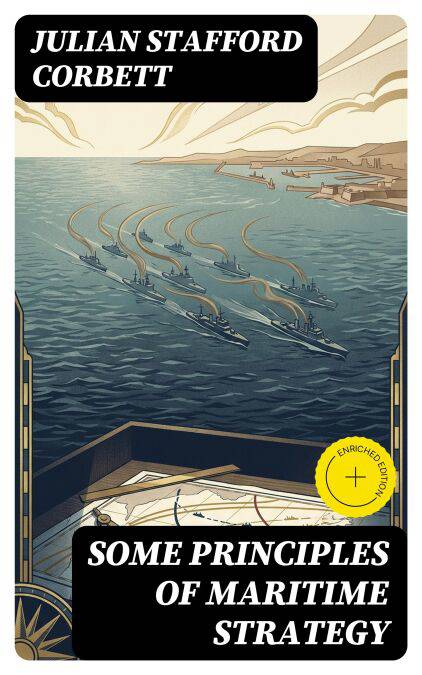
Some Principles of Maritime Strategy EBOOK
Enriched edition. Sea Control, Logistics, and the Strategic Link Between Naval and Land Power in National Policy
Julian Stafford Corbett
Ebook | Anglais
1,99 €
+ 1 points
Format
Description
In "Some Principles of Maritime Strategy," Julian Stafford Corbett presents a foundational analysis of naval warfare that transcends the tactical to explore the broader strategic implications of maritime power. Written in the early 20th century, Corbett's work is distinguished by its scholarly rigor and a nuanced understanding of the interplay between sea and land power. He advocates for a maritime strategy that emphasizes the importance of sea control, logistics, and the psychological dimensions of naval engagement, positioning maritime strategy as an essential pillar of national policy in an imperial context. Julian Stafford Corbett (1854-1922) was a British naval historian and theorist whose deep-seated interest in maritime affairs stemmed from his maritime heritage and education. As a close observer of contemporary naval developments, particularly during the age of imperialism, Corbett sought to articulate a framework that transcended the prevailing doctrines of his time. His perspectives were shaped by the geopolitical realities of his era, which underscored the critical role of naval power in securing national interests and maintaining global influence. This seminal work is highly recommended for scholars, military professionals, and enthusiasts of maritime history alike. Corbett's insights remain particularly relevant in today's geopolitical landscape, where naval strategy continues to evolve in response to new threats. Readers will find in Corbett's text both a historical perspective and timeless principles that illuminate the art of maritime strategy.
In this enriched edition, we have carefully created added value for your reading experience:
- A succinct Introduction situates the work's timeless appeal and themes.
- The Synopsis outlines the central plot, highlighting key developments without spoiling critical twists.
- A detailed Historical Context immerses you in the era's events and influences that shaped the writing.
- A thorough Analysis dissects symbols, motifs, and character arcs to unearth underlying meanings.
- Reflection questions prompt you to engage personally with the work's messages, connecting them to modern life.
- Hand‐picked Memorable Quotes shine a spotlight on moments of literary brilliance.
- Interactive footnotes clarify unusual references, historical allusions, and archaic phrases for an effortless, more informed read.
In this enriched edition, we have carefully created added value for your reading experience:
- A succinct Introduction situates the work's timeless appeal and themes.
- The Synopsis outlines the central plot, highlighting key developments without spoiling critical twists.
- A detailed Historical Context immerses you in the era's events and influences that shaped the writing.
- A thorough Analysis dissects symbols, motifs, and character arcs to unearth underlying meanings.
- Reflection questions prompt you to engage personally with the work's messages, connecting them to modern life.
- Hand‐picked Memorable Quotes shine a spotlight on moments of literary brilliance.
- Interactive footnotes clarify unusual references, historical allusions, and archaic phrases for an effortless, more informed read.
Spécifications
Parties prenantes
- Auteur(s) :
- Editeur:
Contenu
- Nombre de pages :
- 263
- Langue:
- Anglais
Caractéristiques
- EAN:
- 8596547010715
- Date de parution :
- 27-05-22
- Format:
- Ebook
- Protection digitale:
- Digital watermarking
- Format numérique:
- ePub


Seulement chez Librairie Club
+ 1 points sur votre carte client de Librairie Club
Cadeau

Cadeau


Les avis
Nous publions uniquement les avis qui respectent les conditions requises. Consultez nos conditions pour les avis.