


- Retrait en 2 heures
- Assortiment impressionnant
- Paiement sécurisé
- Toujours un magasin près de chez vous
- Retrait gratuit dans votre magasin Club
- 7.000.0000 titres dans notre catalogue
- Payer en toute sécurité
- Toujours un magasin près de chez vous



Description
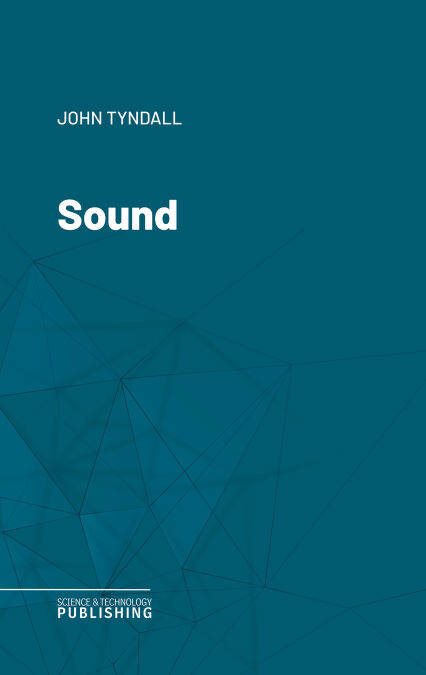
Sound: An Elementary Textbook on the Science of Sound, for the Use of Students in Colleges and Technical Schools by William Hallock and Herbert T. Wade is a comprehensive and accessible exploration of the principles and phenomena of sound. Designed for students and general readers alike, the book delves into the fundamental concepts of acoustics, beginning with the nature and propagation of sound waves through various media. It covers the essential properties of sound, such as pitch, loudness, and quality, and explains the physical basis of these characteristics in clear, straightforward language. The authors guide readers through the mechanics of vibration, resonance, and the behavior of sound in air, liquids, and solids. The text examines the mathematical relationships governing sound waves, including frequency, wavelength, and velocity, and provides practical examples and experiments to illustrate key ideas. Special attention is given to the human perception of sound, the structure and function of the ear, and the science behind musical tones and instruments. Throughout the book, Hallock and Wade emphasize the importance of scientific observation and experimentation, offering numerous diagrams, illustrations, and problem sets to reinforce learning. The later chapters explore advanced topics such as the Doppler effect, echoes, reverberation, and the applications of sound in technology and communication, including telephony and acoustical engineering. Sound stands as a valuable resource for anyone seeking a thorough yet approachable introduction to the science of acoustics, blending theoretical foundations with practical insights and historical context. Its clear explanations and methodical approach make it an enduring reference for students, educators, and enthusiasts interested in the fascinating world of sound.
Spécifications
Parties prenantes
- Auteur(s) :
- Editeur:
Contenu
- Langue:
- Anglais
Caractéristiques
- EAN:
- 9782528114421
- Date de parution :
- 31-08-25
- Format:
- Ebook
- Protection digitale:
- /
- Format numérique:
- ePub


Seulement chez Librairie Club
+ 19 points sur votre carte client de Librairie Club

Les avis
Nous publions uniquement les avis qui respectent les conditions requises. Consultez nos conditions pour les avis.