


- Retrait en 2 heures
- Assortiment impressionnant
- Paiement sécurisé
- Toujours un magasin près de chez vous
- Retrait en 2 heures
- Assortiment impressionnant
- Paiement sécurisé
- Toujours un magasin près de chez vous



169,95 €
+ 339 points
Format
Description
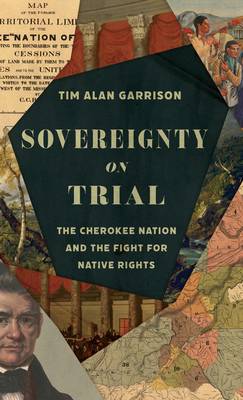
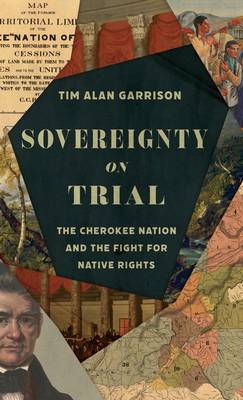
The story of the legal battle between the Cherokee Nation and the State of Georgia that ultimately led to the infamous Trail of Tears and the ongoing struggles for Native sovereignty.
Sovereignty on Trial tells the story of a trio of landmark United States Supreme Court cases--Johnson v. M'Intosh (1823), Cherokee Nation v. Georgia (1831), and Worcester v. Georgia (1832)--that considered the legal status of Native nations in the early nineteenth century.
Known as the Marshall Trilogy--majority opinions all written by Chief Justice John Marshall--the decisions are inconsistent in their holdings and reasoning, leaving American Indian law and interpretations of Native sovereignty confusing and ambiguous. In M'Intosh, Marshall used the imperial doctrine of discovery to diminish the property rights and autonomy of the Native nations. Subsequent interpretations of Marshall's opinion in Cherokee Nation, with its "guardian and ward" analogy, ultimately placed Native people in a dependent status with the United States. At the end of his judicial career, however, Marshall came to view Native rights in a different light, and his opinion in Worcester was a powerful acclamation of Native political sovereignty and territorial rights. Courts have tried with little success to find a coherent line through the three rulings.
The two Georgia cases resulted from the state's efforts to extend its jurisdiction over the Cherokee Nation and annihilate its government. These cases were decided against the backdrop of the Indian Removal Act of 1830. When President Andrew Jackson and Congress failed to enforce Worcester, Georgia interned and forcibly removed the Cherokee in the now infamous tragedy known as the Trail of Tears.
Tim Alan Garrison places this trio of cases in their broader legal and historical context. Significantly, Garrison explains why Georgia sought to expel the Cherokees from their homeland, how these attacks on native sovereignty tore apart Cherokee national unity, and how the changes in Cherokee political culture determined their strategy in resisting the state's onslaught. The Cherokee resistance against Georgia was a remarkable example of national courage for the Indigenous peoples of the world, and their determination to fight oppression through the judicial system of the United States left a lasting impact on American Indian law. The Cherokee Cases tells an important, if disturbing, story whose reverberations are felt to the present day.
Spécifications
Parties prenantes
- Auteur(s) :
- Editeur:
Contenu
- Nombre de pages :
- 280
- Langue:
- Anglais
- Collection :
Caractéristiques
- EAN:
- 9780700641383
- Date de parution :
- 19-05-26
- Format:
- Livre relié
- Format numérique:
- Genaaid
- Dimensions :
- 149 mm x 217 mm
- Poids :
- 517 g


Seulement chez Librairie Club
+ 339 points sur votre carte client de Librairie Club
Cadeau


Les avis
Nous publions uniquement les avis qui respectent les conditions requises. Consultez nos conditions pour les avis.