


- Retrait en 2 heures
- Assortiment impressionnant
- Paiement sécurisé
- Toujours un magasin près de chez vous
- Retrait en 2 heures
- Assortiment impressionnant
- Paiement sécurisé
- Toujours un magasin près de chez vous



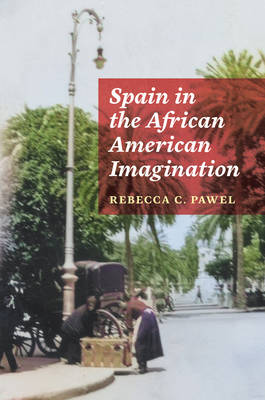
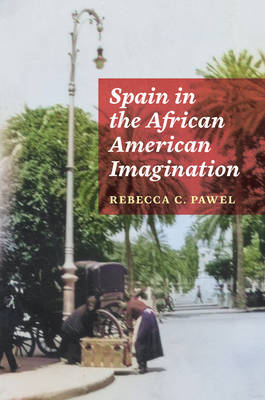
Description
Revealing how African American intellectuals reframed race, history, and cultural belonging in the modern era
In 1954, Richard Wright rented a car in France and drove south to the Spanish border on the first of two month-long trips that gave rise to the travelogue Pagan Spain, where Wright declared that the Pyrenees, on the France-Spain border, "mark the termination of Europe and the beginning of Africa." While Spain was not actually seen as an African country, such language suggests instead that Spain would be incomplete without African influences. In the wake of the Spanish-American war of 1898, Americans and Northern Europeans attributed Spain's weakened economy and loss of international clout to an inability to modernize, which they described in highly racialized terms. As African American modernists explored the country, they compared modernist notions coming out of the United States pertaining to race, gender, and other categories against Spain's history and contemporary culture.
Spain in the African American Imagination traces how African American intellectuals in the mid-20th century, including Wright, Arthur Schomburg, Langston Hughes, Dorothy Peterson, and Frank Yerby, interpreted Spanish national myths. Rebecca Pawel argues that a literary idea of Spain as eternally "medieval" or "primitive" gave African American writers a conceptual space for thinking about the ways race is constructed through historical narrative. Spain provided a location that was considered ipso facto archaic and thus used racial referents typical of an era removed from the present in a space that was not quite African and not quite European. Ultimately, Pawel argues, Spain became a powerful lens through which African American intellectuals rewrote racial narratives and reimagined modernity across the Atlantic.
Spécifications
Parties prenantes
- Auteur(s) :
- Editeur:
Contenu
- Nombre de pages :
- 296
- Langue:
- Anglais
- Collection :
Caractéristiques
- EAN:
- 9781625349828
- Date de parution :
- 08-02-27
- Format:
- Livre relié
- Format numérique:
- Genaaid
- Dimensions :
- 152 mm x 229 mm
- Poids :
- 453 g


Seulement chez Librairie Club
+ 272 points sur votre carte client de Librairie Club
Cadeau


Les avis
Nous publions uniquement les avis qui respectent les conditions requises. Consultez nos conditions pour les avis.