


- Retrait en 2 heures
- Assortiment impressionnant
- Paiement sécurisé
- Toujours un magasin près de chez vous
- Retrait en 2 heures
- Assortiment impressionnant
- Paiement sécurisé
- Toujours un magasin près de chez vous



132,95 €
+ 265 points
Description
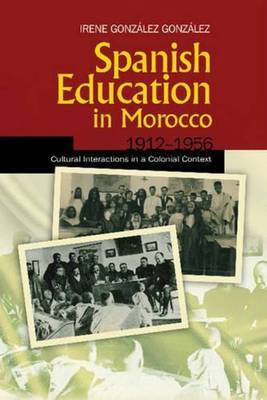
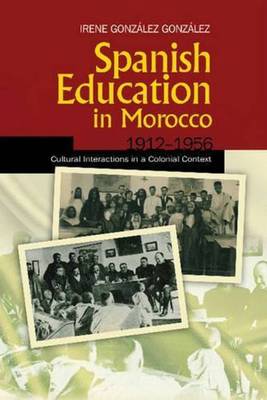
After establishing the Spanish Protectorate in Northern Morocco (1912-1956), Spain needed to create a system of colonial policies for the territory it was now to govern. Education became one instrument among many at the service of colonization. Spain created its own colonial educational model based on Spanish schools, Spanish-Arab schools and Spanish-Jewish schools, which coexisted with Koranic madrasas and Talmudic, Alliance Israelite Universelle and nationalist schools. The institutions created for Moroccans by the Spaniards united tradition the Arabic and Hebrew languages and Muslim and Jewish religions with the models and principles of the schools in Spain at the time. The end goal was to instruct the population according to a pro-Spanish, colonizer-friendly ideology in order to control the society and territory in a way that complemented military policies. The coup d'état led by General Franco in Spain in 1936 brought about a change in policy in the Spanish Protectorate in Morocco. The Franco government's innovation was to Moroccanize the teaching paradigm, which transformed the Spanish-Arab educational model into a Moroccan model. The Spanish-Arab concept gave way to a Moroccan concept, which entailed the recognition of a national identity based on linguistic and religious precepts on the part of Spain. This process of Moroccanization did not develop under the same terms in other parts of the country, which gave the Spanish Protectorate its distinctive traits. Spain developed a policy that combined educational and cultural aspects through a discourse of Spanish-Arab brotherhood. The establishment of cultural institutions was a sign of this symbiosis and the policy became an important part of how the regime presented itself abroad.
Spécifications
Parties prenantes
- Auteur(s) :
- Editeur:
Contenu
- Nombre de pages :
- 256
- Langue:
- Anglais
- Collection :
Caractéristiques
- EAN:
- 9781845196875
- Date de parution :
- 01-05-15
- Format:
- Livre relié
- Format numérique:
- Genaaid
- Dimensions :
- 155 mm x 234 mm
- Poids :
- 476 g


Seulement chez Librairie Club
+ 265 points sur votre carte client de Librairie Club
Cadeau


Les avis
Nous publions uniquement les avis qui respectent les conditions requises. Consultez nos conditions pour les avis.