


- Retrait en 2 heures
- Assortiment impressionnant
- Paiement sécurisé
- Toujours un magasin près de chez vous
- Retrait en 2 heures
- Assortiment impressionnant
- Paiement sécurisé
- Toujours un magasin près de chez vous



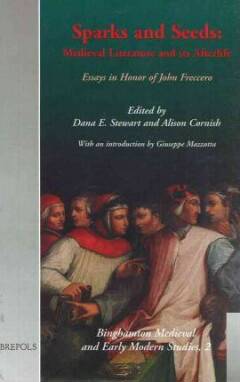
Sparks and Seeds
Medieval Literature and Its Afterlife. Essays in Honor of John Freccero
31,80 €
+ 63 points
Description
John Freccero is internationally renowned for his scholarship on Dante, Petrarch, Macchiavelli, and other authors. Currently Professor of Italian and Comparative Literature at New York University, he has also taught at Yale, Stanford, Cornell, and Johns Hopkins. His numerous honours include Fulbright and Guggenheim fellowships and awards from the city of Florence and the Republic of Italy. His publications encompass articles on film, philosophy, and literature of virtually all time periods. All the authors in this Festschrift are former students of Freccero. All the articles appertain to Italian literature - from Dennis Costa's literary analysis of Bonaventure's Itinerarium to Patricia Parker's tracing of the State of Maryland's medieval Italian motto back through its English Renaissance sources. Many pieces are concerned with Dante directly (Kleiner, Schnapp, Jacoff, Cornish, Ginsberg, Hawkins, Chiarenza), and several others dealing with medieval and Renaissance Italian subjects do so indirectly (Costa, Stephens, Quint). Two are concerned with pre-modern cultural and literary implications of the history of science (Stewart, Reeves); the remainder trace the afterlife of medieval or Renaisance Italian motifs in modern culture (Parker, West, Marcus). The articles are as follows: Giuseppe Mazzotta, 'Introduction'; Dennis Costa, 'Conversion to the text's terms: processes of signification in Bonaventure's Itinerarium Mentis in Deum; Dana Stewart, 'Spirits of love: subjectivity, gender, and optics in the lyrics of Guido Cavalcanti'; John Kleiner, 'On failing one's teachers: Dante, Virgil, and the ironies of instruction'; Jeffrey Schnapp, 'Lectura Dantis: Inferno 30'; Rachel Jacoff, 'Our bodies, our selves: the body in the Commedia'; Alison Cornish, 'Telling time in Purgatory'; Warren Ginsberg, 'Dante's aesthetics of being'; Peter Hawkins, 'Are you here?: Surprise in the Commedia'; Marguerite Chiarenza, 'Solomon's Song in the Divine Comedy'; (...)
Spécifications
Parties prenantes
- Editeur:
Contenu
- Nombre de pages :
- 358
- Langue:
- Anglais
- Collection :
- Tome:
- n° 2
Caractéristiques
- EAN:
- 9782503509068
- Date de parution :
- 07-04-00
- Format:
- Livre relié
- Format numérique:
- Genaaid
- Dimensions :
- 161 mm x 246 mm
- Poids :
- 748 g

Seulement chez Librairie Club
+ 63 points sur votre carte client de Librairie Club
Cadeau


Les avis
Nous publions uniquement les avis qui respectent les conditions requises. Consultez nos conditions pour les avis.