


- Retrait en 2 heures
- Assortiment impressionnant
- Paiement sécurisé
- Toujours un magasin près de chez vous
- Retrait gratuit dans votre magasin Club
- 7.000.0000 titres dans notre catalogue
- Payer en toute sécurité
- Toujours un magasin près de chez vous



Description
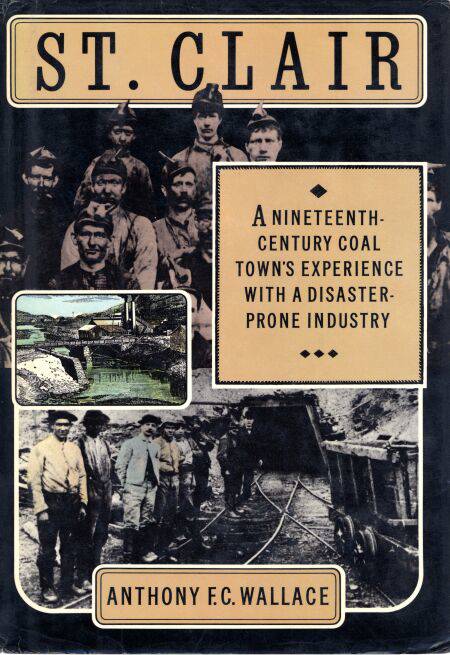
Located near the southern edge of the Pennsylvania anthracite, the town of St. Clair in the early half of the 19th century seemed to be perfectly situated to provide fuel to the iron and steel industry that was the heart of the Industrial Revolution in America. It was a time of unprecedented promise and possibility for the region, and yet, in the years between 1830 and 1880, only grandiose illusions flourished there. St. Clair itself succumbed early on to a devastating economic blight, one that would in time affect anthracite mining everywhere.
In this dramatic work of social history, Anthony F. C. Wallace re-creates St. Clair in those years when expectations collided with reality, when the coal trade was in chronic distress, exacerbated by the epic battles between the forces of labor and capital. As he did in his Bancroft Prize-winning Rockdale, Wallace uses public records and private papers to reconstruct the operation of an anthracite colliery and the life of a working-man’s town totally dependent upon it. He describes the labor hierarchy of the collieries, the communal spirit that sprang up in the outlying mine patches, the polyglot immigrant life in the taverns and churchs, and the workingmen’s societies that provided identity to the miners and gave relief to families in distress. He examines the birth of the first effective miners’ union and documents the escalating antagonism between Irish immigrant workers—mostly Catholic—and the Protestant middle classes who owned the collieries.
Wallace reveals the blindness, greed, and self-congratulation of the mine owners and operators. These “heroes” of the entrepreneurial wars disregarded geologists’ warnings that the coal seams south of St. Clair were virtually inaccessible and, at best, extremely costly to mine, and then blamed their economic woes on the lack of a high tariff on imported British iron. To cut costs, they ignored the most basic and safety engineering practices and then blamed “the careless miner” and “Irish hooligans” for the catastrophic accidents that resulted. In thrall to a great dream of wealth and power, they plunged ahead to bankruptcy while the miners paid with their lives.
St. Clair is a rich and illuminating work of scholarship—an engrossing portrait of a disaster-prone industry (a portrait that stands as a sober warning to the nuclear-power industry) and of the tragic hubris of a ruling class that brough ruin upon a Pennsylvania coal town at a crucial moment in its history.
In this dramatic work of social history, Anthony F. C. Wallace re-creates St. Clair in those years when expectations collided with reality, when the coal trade was in chronic distress, exacerbated by the epic battles between the forces of labor and capital. As he did in his Bancroft Prize-winning Rockdale, Wallace uses public records and private papers to reconstruct the operation of an anthracite colliery and the life of a working-man’s town totally dependent upon it. He describes the labor hierarchy of the collieries, the communal spirit that sprang up in the outlying mine patches, the polyglot immigrant life in the taverns and churchs, and the workingmen’s societies that provided identity to the miners and gave relief to families in distress. He examines the birth of the first effective miners’ union and documents the escalating antagonism between Irish immigrant workers—mostly Catholic—and the Protestant middle classes who owned the collieries.
Wallace reveals the blindness, greed, and self-congratulation of the mine owners and operators. These “heroes” of the entrepreneurial wars disregarded geologists’ warnings that the coal seams south of St. Clair were virtually inaccessible and, at best, extremely costly to mine, and then blamed their economic woes on the lack of a high tariff on imported British iron. To cut costs, they ignored the most basic and safety engineering practices and then blamed “the careless miner” and “Irish hooligans” for the catastrophic accidents that resulted. In thrall to a great dream of wealth and power, they plunged ahead to bankruptcy while the miners paid with their lives.
St. Clair is a rich and illuminating work of scholarship—an engrossing portrait of a disaster-prone industry (a portrait that stands as a sober warning to the nuclear-power industry) and of the tragic hubris of a ruling class that brough ruin upon a Pennsylvania coal town at a crucial moment in its history.
Spécifications
Parties prenantes
- Auteur(s) :
- Editeur:
Contenu
- Nombre de pages :
- 519
- Langue:
- Anglais
Caractéristiques
- EAN:
- 9780307826107
- Date de parution :
- 18-09-12
- Format:
- Ebook
- Protection digitale:
- Adobe DRM
- Format numérique:
- ePub


Seulement chez Librairie Club
+ 17 points sur votre carte client de Librairie Club
Cadeau

Cadeau


Les avis
Nous publions uniquement les avis qui respectent les conditions requises. Consultez nos conditions pour les avis.