


- Retrait en 2 heures
- Assortiment impressionnant
- Paiement sécurisé
- Toujours un magasin près de chez vous
- Retrait en 2 heures
- Assortiment impressionnant
- Paiement sécurisé
- Toujours un magasin près de chez vous



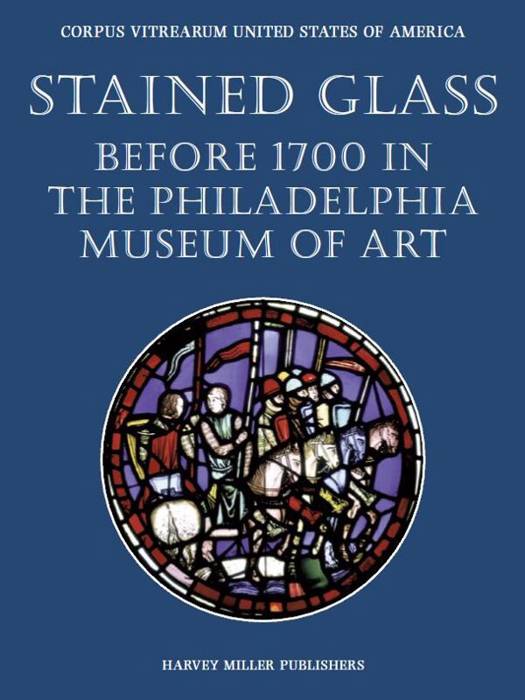
Stained Glass Before 1700 in the Collection of the Philadelphia Museum of Art
Renee Burnam
190,80 €
+ 381 points
Description
The Philadelphia Museum of Art is renowned for its world-class collections, and the medium of stained glass was already recognized as an integral part of these collections since the time of the museum's establishment in 1876. It was in that year that the first stained glass window was purchased for the original building in Fairmount Park - Memorial Hall - and the acquisition of stained glass has played a significant role in the development of the museum ever since. Medieval glass in particular, displayed as it now is in the context of the museum's medieval installations, has enhanced both the appreciation as well as a deeper understanding of the art of the Middle Ages. The present volume, Part VI/1 of the series Corpus Vitrearum USA, illustrates and catalogues in great detail the entire holdings of more than 140 stained glass panels now in the Philadelphia Museum of Art. The collection is wide-ranging in both date and origin of production: it includes panels of high quality from the early thirteenth to the seventeenth century, and from a number of different countries and regions. Pride of place among the items catalogued are the large-scale ecclesiastical windows from France, the most precious of which are the three stained glass medallions commissioned in mid-thirteenth century by Louis IX for his palace chapel in Paris, the Sainte-Chapelle. Of equal importance is the holding of English armorial glass, considered to be the most extensive collection in the United States, while from the North and South Lowlands, the museum also owns an interesting group of unipartite glass panels. The author, Dr. Renee Burnam, provides an exceptionally detailed and well-researched catalogue entry for each panel, and gives not only a full description of its iconography, style, technique and condition, but introduces every item with a lengthy account of the history of the glass, enlivening her text with a wealth of comparative illustrations. In addition to the main body of the catalogue, Dr. Burnam also provides shorter descriptions of the figural glass acquired by the museum in 1945 from the estate of George Gray Barnard and of a group of composite heraldic glass, either altered or dated after 1700; and finally she includes entries for further unipartite panels either damaged, fragmented or dated post-1700. Furthermore there is a most interesting and useful Appendix listing de-accessioned glass that had been acquired earlier in the museum's history. How this substantial collection of stained glass was formed is the main theme of the author's Introduction to this volume. She traces the acquisitions, gifts and bequests from the time of the founding of the museum and shows how the present collection benefitted from the enterprise and discernment of successive museum directors and curators, and how great the contribution has been by the many generous collectors, donors and benefactors. All catalogued panels are reproduced in colour and juxtaposed with their relevant restoration charts. The volume also includes a Glossary, an exhaustive Bibliography and a comprehensive Index.
Spécifications
Parties prenantes
- Auteur(s) :
- Editeur:
Contenu
- Nombre de pages :
- 432
- Langue:
- Anglais
- Collection :
- Tome:
- n° 6
Caractéristiques
- EAN:
- 9781872501192
- Date de parution :
- 28-01-13
- Format:
- Livre relié
- Format numérique:
- Genaaid
- Dimensions :
- 241 mm x 320 mm
- Poids :
- 2417 g


Seulement chez Librairie Club
+ 381 points sur votre carte client de Librairie Club
Cadeau


Les avis
Nous publions uniquement les avis qui respectent les conditions requises. Consultez nos conditions pour les avis.