


- Retrait en 2 heures
- Assortiment impressionnant
- Paiement sécurisé
- Toujours un magasin près de chez vous
- Retrait en 2 heures
- Assortiment impressionnant
- Paiement sécurisé
- Toujours un magasin près de chez vous



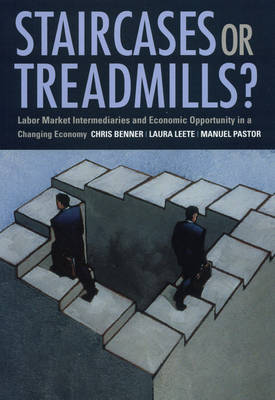
Staircases or Treadmills?
Labor Market Intermediaries and Economic Opportunity in a Changing Economy
Chris Benner, Laura Leete, Manuel Pastor
Livre relié | Anglais
64,95 €
+ 129 points
Passer une commande en un clic
Payer en toute sécurité


Livraison en Belgique: 3,99 €
Livraison en magasin gratuite
Description
Globalization, technological change, and deregulation have made the American marketplace increasingly competitive in recent decades, but for many workers this "new economy" has entailed heightened job insecurity, lower wages, and scarcer benefits. As the job market has grown more volatile, a variety of labor market intermediaries--organizations that help job seekers find employment--have sprung up, from private temporary agencies to government "One-Stop Career Centers." In Staircases or Treadmills? Chris Benner, Laura Leete, and Manuel Pastor investigate what approaches are most effective in helping workers to secure jobs with decent wages and benefits, and they provide specific policy recommendations for how job-matching organizations can better serve disadvantaged workers. Staircases or Treadmills? is the first comprehensive study documenting the prevalence of all types of labor market intermediaries and investigating how these intermediaries affect workers' employment opportunities. Benner, Leete, and Pastor draw on years of research in two distinct regional labor markets--"old economy" Milwaukee and "new economy" Silicon Valley--including a first-of-its-kind random survey of the prevalence and impacts of intermediaries, and a wide range of interviews with intermediary agencies' staff and clients. One of the main obstacles that disadvantaged workers face is that social networks of families and friends are less effective in connecting job-seekers to stable, quality employment. Intermediaries often serve as a substitute method for finding a job. Which substitute is chosen, however, matters: The authors find that the most effective organizations--including many unions, community colleges, and local non-profits--actively foster contacts between workers and employers, tend to make long-term investments in training for career development, and seek to transform as well as satisfy market demands. But without effective social networks to help workers locate the best intermediaries, most rely on private temporary agencies and other organizations that offer fewer services and, statistical analysis shows, often channel their participants into jobs with low wages and few benefits. Staircases or Treadmills? suggests that, to become more effective, intermediary organizations of all types need to focus more on training workers, teaching networking skills, and fostering contact between workers and employers in the same industries. A generation ago, rising living standards were broadly distributed and coupled with relatively secure employment. Today, many Americans fear that heightened job insecurity is overshadowing the benefits of dynamic economic growth. Staircases or Treadmills? is a stimulating guide to how private and public job-matching institutions can empower disadvantaged workers to share in economic progress.
Spécifications
Parties prenantes
- Auteur(s) :
- Editeur:
Contenu
- Nombre de pages :
- 308
- Langue:
- Anglais
Caractéristiques
- EAN:
- 9780871541697
- Date de parution :
- 13-04-07
- Format:
- Livre relié
- Format numérique:
- Ongenaaid / garenloos gebonden
- Dimensions :
- 163 mm x 235 mm
- Poids :
- 603 g


Seulement chez Librairie Club
+ 129 points sur votre carte client de Librairie Club
Cadeau

Cadeau


Les avis
Nous publions uniquement les avis qui respectent les conditions requises. Consultez nos conditions pour les avis.