


- Retrait en 2 heures
- Assortiment impressionnant
- Paiement sécurisé
- Toujours un magasin près de chez vous
- Retrait en 2 heures
- Assortiment impressionnant
- Paiement sécurisé
- Toujours un magasin près de chez vous



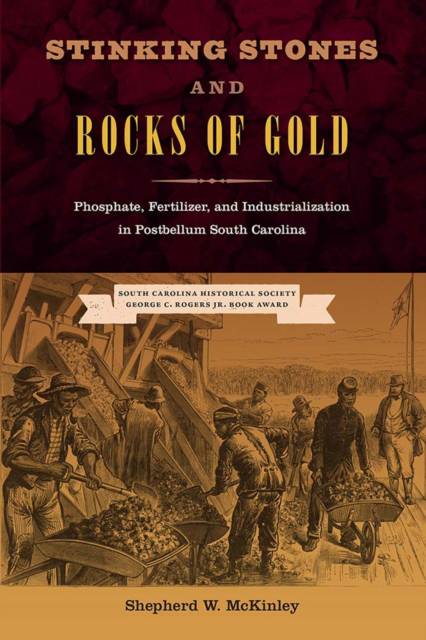
Stinking Stones and Rocks of Gold
Phosphate, Fertilizer, and Industrialization in Postbellum South Carolina
Shepherd W McKinley
106,95 €
+ 213 points
Format
Description
In the first book ever written about the impact of phosphate mining on the South Carolina plantation economy, Shepherd McKinley explains how the convergence of the phosphate and fertilizer industries carried long-term impacts for America and the South.
Fueling the rapid growth of lowcountry fertilizer companies, phosphate mining provided elite plantation owners a way to stem losses from emancipation. At the same time, mining created an autonomous alternative to sharecropping, enabling freed people to extract housing and labor concessions.
Stinking Stones and Rocks of Gold develops an overarching view of what can be considered one of many key factors in the birth of southern industry. This top-down, bottom-up history (business, labor, social, and economic) analyzes an alternative path for all peoples in the post-emancipation South.
Spécifications
Parties prenantes
- Auteur(s) :
- Editeur:
Contenu
- Nombre de pages :
- 224
- Langue:
- Anglais
- Collection :
Caractéristiques
- EAN:
- 9780813049243
- Date de parution :
- 18-03-14
- Format:
- Livre relié
- Format numérique:
- Genaaid
- Dimensions :
- 155 mm x 231 mm
- Poids :
- 521 g


Seulement chez Librairie Club
+ 213 points sur votre carte client de Librairie Club
Cadeau


Les avis
Nous publions uniquement les avis qui respectent les conditions requises. Consultez nos conditions pour les avis.