


- Retrait en 2 heures
- Assortiment impressionnant
- Paiement sécurisé
- Toujours un magasin près de chez vous
- Retrait en 2 heures
- Assortiment impressionnant
- Paiement sécurisé
- Toujours un magasin près de chez vous



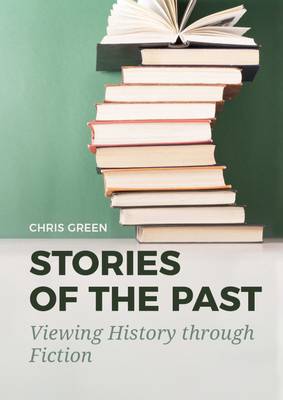
Description
"Chris Green's book proposes several methods for doing so by analyzing the layers from greater to lesser complexity; from literary tourism, to adaptation, to critical review, to the writing of a novel itself and by proposing various methods for deconstructing these layers... Green provides a great many aids to the analysis of historical fiction in his book, so the interested reader is certain to find helpful methodological tools with in its pages." - Journal of American Folklore Vol. 138, No. 548, Spring 2025
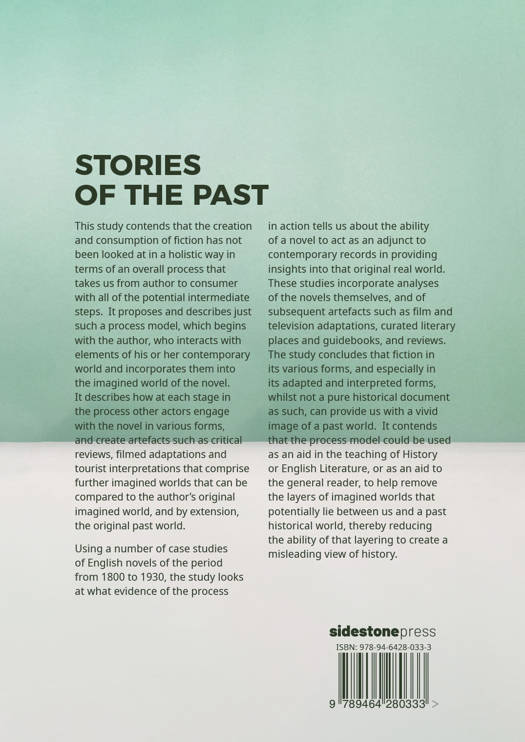
This study contends that the creation and consumption of fiction has not been looked at in a holistic way in terms of an overall process that takes us from author to consumer with all of the potential intermediate steps. It proposes and describes just such a process model, which begins with the author, who interacts with elements of his or her contemporary world and incorporates them into the imagined world of the novel. It describes how at each stage in the process other actors engage with the novel in various forms, and create artifacts such as critical reviews, filmed adaptations and tourist interpretations that comprise further imagined worlds that can be compared to the author's original imagined world, and by extension, the original past world.
Using a number of case studies of English novels of the period from 1800 to 1930, the study looks at what evidence of the process in action tells us about the ability of a novel to act as an adjunct to contemporary records in providing insights into that original real world. These studies incorporate analyses of the novels themselves, and of subsequent artifacts such as film and television adaptations, curated literary places and guidebooks, and reviews. The study concludes that fiction in its various forms, and especially in its adapted and interpreted forms, while not a pure historical document as such, can provide us with a vivid image of a past world. It contends that the process model could be used as an aid in the teaching of History or English Literature, or as an aid to the general reader, to help remove the layers of imagined worlds that potentially lie between us and a past historical world, thereby reducing the ability of that layering to create a misleading view of history.
This study contends that the creation and consumption of fiction has not been looked at in a holistic way in terms of an overall process that takes us from author to consumer with all of the potential intermediate steps. It proposes and describes just such a process model, which begins with the author, who interacts with elements of his or her contemporary world and incorporates them into the imagined world of the novel. It describes how at each stage in the process other actors engage with the novel in various forms, and create artifacts such as critical reviews, filmed adaptations and tourist interpretations that comprise further imagined worlds that can be compared to the author's original imagined world, and by extension, the original past world.
Using a number of case studies of English novels of the period from 1800 to 1930, the study looks at what evidence of the process in action tells us about the ability of a novel to act as an adjunct to contemporary records in providing insights into that original real world. These studies incorporate analyses of the novels themselves, and of subsequent artifacts such as film and television adaptations, curated literary places and guidebooks, and reviews. The study concludes that fiction in its various forms, and especially in its adapted and interpreted forms, while not a pure historical document as such, can provide us with a vivid image of a past world. It contends that the process model could be used as an aid in the teaching of History or English Literature, or as an aid to the general reader, to help remove the layers of imagined worlds that potentially lie between us and a past historical world, thereby reducing the ability of that layering to create a misleading view of history.
Spécifications
Parties prenantes
- Auteur(s) :
- Editeur:
Contenu
- Nombre de pages :
- 250
- Langue:
- Anglais
- Collection :
Caractéristiques
- EAN:
- 9789464280340
- Date de parution :
- 21-09-22
- Format:
- Livre relié
- Format numérique:
- Genaaid
- Dimensions :
- 178 mm x 257 mm
- Poids :
- 798 g


Seulement chez Librairie Club
+ 190 points sur votre carte client de Librairie Club
Cadeau


Les avis
Nous publions uniquement les avis qui respectent les conditions requises. Consultez nos conditions pour les avis.