


En raison d'une grève chez bpost, des retards de livraison peuvent survenir. Besoin de quelque chose en urgence ? Optez pour un retrait en magasin ou rendez-vous dans une Librairie Club à proximité.
- Retrait en 2 heures
- Assortiment impressionnant
- Paiement sécurisé
- Toujours un magasin près de chez vous
En raison d'une grève chez bpost, des retards de livraison peuvent survenir. Besoin de quelque chose en urgence ? Optez pour un retrait en magasin ou rendez-vous dans une Librairie Club à proximité.
- Retrait en 2 heures
- Assortiment impressionnant
- Paiement sécurisé
- Toujours un magasin près de chez vous



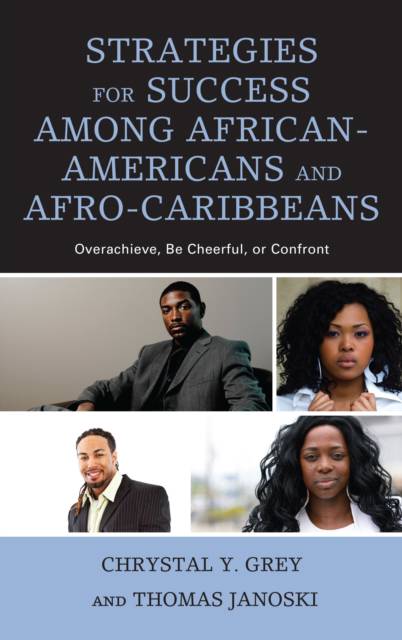
Strategies for Success Among African-Americans and Afro-Caribbeans
Overachieve, Be Cheerful, or Confront
Chrystal Y Grey, Thomas Janoski
203,95 €
+ 407 points
Description
How can African Americans and Afro-Caribbeans from the former British colonies be so different in their approaches toward social mobility? Chrystal Y. Grey and Thomas Janoski state that this is because native blacks grow up as "strangers" in their own country and immigrants from the English-speaking Caribbean are conversely part of "the dominant group." Unlike previous research that compares highly educated Afro-Caribbeans to the broad range of African-Americans, this study holds social-class constant by looking only at successful blacks in the upper-middle-class from both groups. This book finds that African-Americans pursue overachievement strategies of working much harder than others do, while Afro-Caribbeans follow an optimistic job strategy expecting promotions and success. However, African-Americans are more likely to use confrontational strategies if their mobility is blocked. The main cause of these differences is that Afro-Caribbeans grow up in a system where they have many examples of black politicians and business leaders (35-90% of their countries are black) and African-Americans have fewer role models (12-14% of the United States are black). Further, the schooling system in Afro-Caribbean countries does not label blacks as underachievers because the schools are almost entirely black. A further problem that African-Americans face is the resentment of a small but significant number of blacks who have little social mobility. They accuse socially mobile African Americans of "acting white," which is a phenomenon that Afro-Caribbeans almost never face and they call it "an African-American thing." To demonstrate this difference, Strategies for Success among African-Americans and Afro-Caribbeans does a historical-comparative analysis of the differences between the black experience after slavery in the United States and Jamaica, Trinidad and Tobago, Guyana, and St. Kitts-Nevis. The authors interview fifty-seven black people and find consistent differences between the US and Caribbean black citizens. Using theories of symbolic interaction and ressentiment, this work challenges previous studies that either claim that Afro-Caribbeans are more motivated than African-Americans, or studies that show that controlling for class, each group is more or less the same.
Spécifications
Parties prenantes
- Auteur(s) :
- Editeur:
Contenu
- Nombre de pages :
- 224
- Langue:
- Anglais
- Collection :
Caractéristiques
- EAN:
- 9781498554497
- Date de parution :
- 18-12-17
- Format:
- Livre relié
- Format numérique:
- Genaaid
- Dimensions :
- 155 mm x 231 mm
- Poids :
- 476 g


Seulement chez Librairie Club
+ 407 points sur votre carte client de Librairie Club
Cadeau


Les avis
Nous publions uniquement les avis qui respectent les conditions requises. Consultez nos conditions pour les avis.