


En raison d'une grève chez bpost, des retards de livraison peuvent survenir. Besoin de quelque chose en urgence ? Optez pour un retrait en magasin ou rendez-vous dans une Librairie Club à proximité.
- Retrait en 2 heures
- Assortiment impressionnant
- Paiement sécurisé
- Toujours un magasin près de chez vous
En raison d'une grève chez bpost, des retards de livraison peuvent survenir. Besoin de quelque chose en urgence ? Optez pour un retrait en magasin ou rendez-vous dans une Librairie Club à proximité.
- Retrait en 2 heures
- Assortiment impressionnant
- Paiement sécurisé
- Toujours un magasin près de chez vous



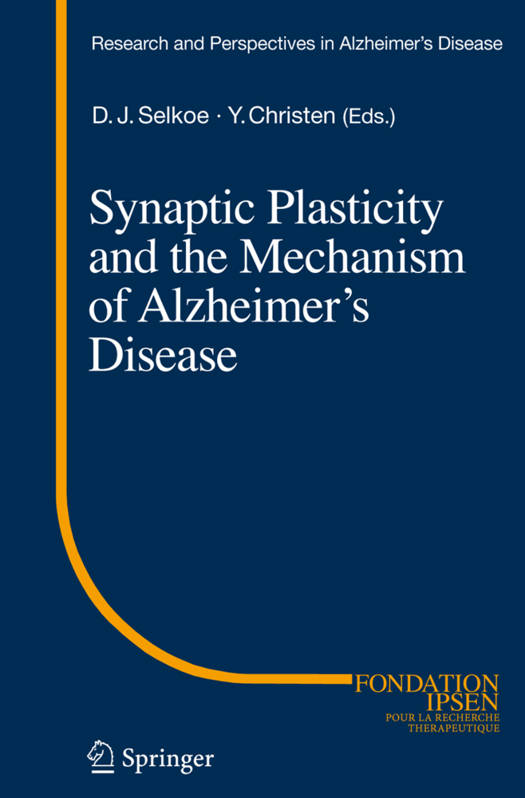
Synaptic Plasticity and the Mechanism of Alzheimer's Disease
259,45 €
Description
During most of the 20th century, neurodegenerative diseases remained among the most enigmatic disorders of medicine. The scientific study of these conditions was descriptive in nature, detailing the clinical and neuropathological phenotypes associated with various diseases, but etiologies and pathogenic mechanisms remained obscure. Beginning in the 1970s, advances in two principal areas - biochemical pathology and molecular genetics - combined to yield powerful clues to the molecular underpinnings of several previously "idiopathic" brain disorders. Among the classical neurodegenerative diseases, perhaps the most rapid progress occurred in research on Alzheimer's disease (AD). In disorders like Huntington's disease, amyotrophic lateral sclerosis and even Parkinson's disease, unbiased genetic screens, linkage analysis and positional cloning have identified causative genes that subsequently allowed the formulation of specific biochemical hypotheses. In sharp contrast, modern research on AD developed in the opposite order: the identification of the protein subunits of the classical brain lesions guided geneticists to disease-inducing genes, for example, APP, apolipoprotein E and tau. Thus, a biochemical hypothesis of disease - that AD is a progressive cerebral amyloidosis caused by the aggregation of the amyloid b-protein (Ab) - preceded and enabled the discovery of etiologies.
Spécifications
Parties prenantes
- Editeur:
Contenu
- Nombre de pages :
- 183
- Langue:
- Anglais
- Collection :
Caractéristiques
- EAN:
- 9783642095191
- Date de parution :
- 30-11-10
- Format:
- Livre broché
- Format numérique:
- Trade paperback (VS)
- Dimensions :
- 156 mm x 234 mm
- Poids :
- 281 g

Seulement chez Librairie Club
Cadeau


Les avis
Nous publions uniquement les avis qui respectent les conditions requises. Consultez nos conditions pour les avis.