


- Retrait en 2 heures
- Assortiment impressionnant
- Paiement sécurisé
- Toujours un magasin près de chez vous
- Retrait en 2 heures
- Assortiment impressionnant
- Paiement sécurisé
- Toujours un magasin près de chez vous



43,45 €
+ 86 points
Description
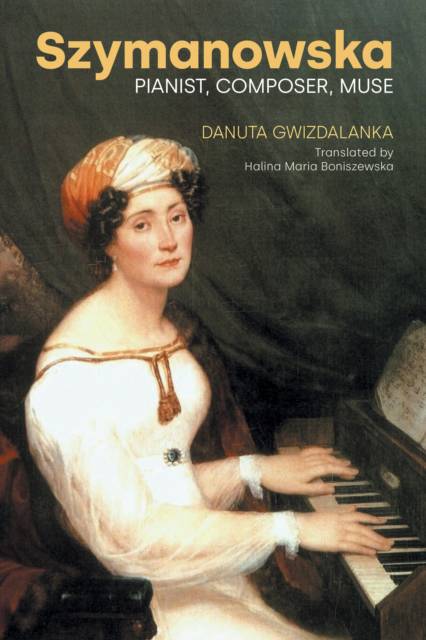
As the first Polish pianist to achieve European fame, Maria Szymanowska (1789-1831) is an extraordinary figure and still far too little-known, even in music circles. A confident, independent woman, and mother of three children, the poet Adam Mickiewicz called her the "queen of tones." Goethe praised her talent, her contemporaries considered her almost a goddess, and she was supported by the greatest composers, such as Cherubini and Rossini.
A talented pianist from an early age, she studied in Paris, and had already gained a reputation for her concert performances when she returned to Poland to marry a wealthy landowner. But she had the urge to perform, and after publishing her Twenty Exercises and Preludes in 1820 (much admired by Robert Schumann), she decided to separate from her husband and support her children by giving piano recitals. This made her a pioneer of female concert performing in Europe, and --even before Clara Schumann -- she became famous for playing difficult works from memory. She also continued to compose, before deciding to stop touring and base herself in St Petersburg, where she lived from 1827. Her salon in the city was famous as a meeting place for some of the finest composers and performers of the age. During her touring years, her performances aroused admiration and adoration wherever she appeared -- ranging from Warsaw to St. Petersburg, Moscow and Kyiv, but also to London and Paris, as well as major German and Italian musical centres.
The book presents in an accessible, but at the same time academically rigorous way, the fate of this independent self-made woman.
A talented pianist from an early age, she studied in Paris, and had already gained a reputation for her concert performances when she returned to Poland to marry a wealthy landowner. But she had the urge to perform, and after publishing her Twenty Exercises and Preludes in 1820 (much admired by Robert Schumann), she decided to separate from her husband and support her children by giving piano recitals. This made her a pioneer of female concert performing in Europe, and --even before Clara Schumann -- she became famous for playing difficult works from memory. She also continued to compose, before deciding to stop touring and base herself in St Petersburg, where she lived from 1827. Her salon in the city was famous as a meeting place for some of the finest composers and performers of the age. During her touring years, her performances aroused admiration and adoration wherever she appeared -- ranging from Warsaw to St. Petersburg, Moscow and Kyiv, but also to London and Paris, as well as major German and Italian musical centres.
The book presents in an accessible, but at the same time academically rigorous way, the fate of this independent self-made woman.
Spécifications
Parties prenantes
- Auteur(s) :
- Traducteur(s):
- Editeur:
Contenu
- Nombre de pages :
- 140
- Langue:
- Anglais
- Collection :
Caractéristiques
- EAN:
- 9781800508804
- Date de parution :
- 01-09-26
- Format:
- Livre relié
- Format numérique:
- Genaaid
- Dimensions :
- 156 mm x 234 mm
- Poids :
- 500 g


Seulement chez Librairie Club
+ 86 points sur votre carte client de Librairie Club
Cadeau


Les avis
Nous publions uniquement les avis qui respectent les conditions requises. Consultez nos conditions pour les avis.