


- Retrait en 2 heures
- Assortiment impressionnant
- Paiement sécurisé
- Toujours un magasin près de chez vous
- Retrait en 2 heures
- Assortiment impressionnant
- Paiement sécurisé
- Toujours un magasin près de chez vous



42,45 €
+ 84 points
Description
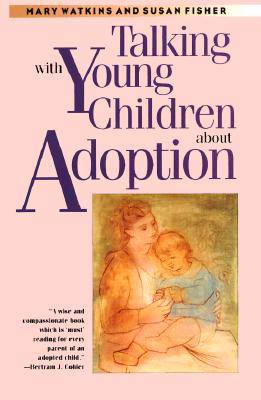
Current wisdom holds that adoptive parents should talk with their child about adoption as early as possible. But no guidelines exist to prepare parents for the various ways their children might respond when these conversations take place. In this wise and sympathetic book, a clinical psychologist and a psychiatrist, both adoptive mothers, discuss how young children make sense of the fact that they are adopted, how it might appear in their play, and what worries they and their parents may have. Accounts by twenty adoptive parents of conversations about adoption with their children, from ages two to ten, graphically convey what the process of sharing about adoption is like. The book will be of invaluable help to parents, teachers, mental health professionals, and lawyers as they deal with the concerns young children have about being adopted.
Mary Watkins and Susan Fisher begin by discussing parental fantasies and concerns that interfere with talking about adoption with their children. They then review the often outdated and disheartening adoption research, showing how its results can be distorted by apprehension and bias. They next discuss how adoption conversation evolves between parents and young children, what the child at various developmental stages does and does not understand, what kinds of questions the young child has, and how these questions reflect more general developmental issues. The heart of the book consists of the stories from families--nuclear, single- parent, lesbian, and interracial families, families with adopted children only, families with both biological and adopted children, families that adopted a child after first foster-parenting. These stories make it clear how early sharing about adoption establishes a family atmosphere in which worries and concerns can freely arise and be addressed, allowing the fact of adoption to strengthen family understanding, honesty, and intimacy. An appendix lists by age the adoption comments, related questions, and play sequences of children.
Mary Watkins and Susan Fisher begin by discussing parental fantasies and concerns that interfere with talking about adoption with their children. They then review the often outdated and disheartening adoption research, showing how its results can be distorted by apprehension and bias. They next discuss how adoption conversation evolves between parents and young children, what the child at various developmental stages does and does not understand, what kinds of questions the young child has, and how these questions reflect more general developmental issues. The heart of the book consists of the stories from families--nuclear, single- parent, lesbian, and interracial families, families with adopted children only, families with both biological and adopted children, families that adopted a child after first foster-parenting. These stories make it clear how early sharing about adoption establishes a family atmosphere in which worries and concerns can freely arise and be addressed, allowing the fact of adoption to strengthen family understanding, honesty, and intimacy. An appendix lists by age the adoption comments, related questions, and play sequences of children.
Spécifications
Parties prenantes
- Auteur(s) :
- Editeur:
Contenu
- Nombre de pages :
- 270
- Langue:
- Anglais
Caractéristiques
- EAN:
- 9780300063172
- Date de parution :
- 22-02-95
- Format:
- Livre broché
- Format numérique:
- Trade paperback (VS)
- Dimensions :
- 155 mm x 234 mm
- Poids :
- 362 g


Seulement chez Librairie Club
+ 84 points sur votre carte client de Librairie Club
Cadeau


Les avis
Nous publions uniquement les avis qui respectent les conditions requises. Consultez nos conditions pour les avis.