


- Retrait en 2 heures
- Assortiment impressionnant
- Paiement sécurisé
- Toujours un magasin près de chez vous
- Retrait en 2 heures
- Assortiment impressionnant
- Paiement sécurisé
- Toujours un magasin près de chez vous



106,00 €
+ 212 points
Description
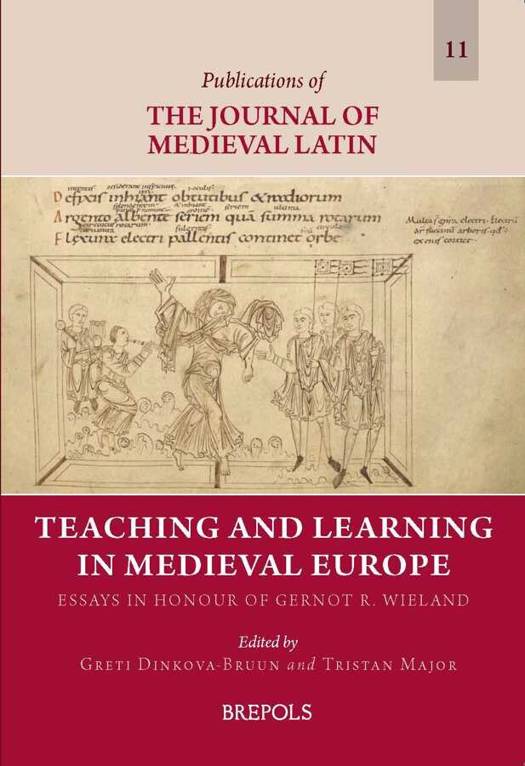
Over the span of his career, Gernot R. Wieland has been actively engaged in the contribution and promotion of the study of medieval literature, particularly in Anglo-Latin and Old English. From his early work on glosses in Anglo-Saxon manuscripts, to his later editorial work for The Journal of Medieval Latin, Wieland has provided the field with diverse, diligent, and creative scholarship. The contributors of this volume pay tribute to the significance of Wieland's teaching and learning in the literature of medieval Europe by presenting him with twelve essays on varied aspects of the subject. The first section of the volume aims to honour Wieland's contributions to the study of medieval glossing. It deals with the history of glossing from early medieval Latin literature to late Middle English grammatical texts, as well as the early interpretative history of Walter of Châtillon's Alexandreis and Geoffrey of Monmouth's Historia regum Britannie. The following section corresponds with Wieland's interest in Anglo-Saxon literature, with essays on the bilingual letters of Ælfric of Eynsham, the poetry of Alcuin of York, and the Old English Hexateuch. The second half of the volume, which examines elements of Latin literature from the eleventh to the fourteenth century, is divided into two sections containing essays that well represent Wieland's diverse philological and literary interests in medieval Latin. The third section of the volume on the texts and contexts of Latin literature presents essays on the books of Abbot Maiolus of Cluny, on scholastic virtues of good teaching, and on Walter Map's Dissuasio Valerii. The final section on the texts and manuscripts of Latin literature provides editions of and commentaries on a Latin-Greek phrase-book, a treatise on the firmament of Genesis 1:6. With these contributions, this volume honours the research interests of a great teacher and learner of the Middle Ages: Gernot Wieland.
Spécifications
Parties prenantes
- Auteur(s) :
- Editeur:
Contenu
- Nombre de pages :
- 249
- Langue:
- Anglais
- Collection :
- Tome:
- n° 11
Caractéristiques
- EAN:
- 9782503568430
- Date de parution :
- 27-04-17
- Format:
- Livre broché
- Format numérique:
- Trade paperback (VS)
- Dimensions :
- 175 mm x 254 mm
- Poids :
- 557 g


Seulement chez Librairie Club
+ 212 points sur votre carte client de Librairie Club
Cadeau


Les avis
Nous publions uniquement les avis qui respectent les conditions requises. Consultez nos conditions pour les avis.