


- Retrait en 2 heures
- Assortiment impressionnant
- Paiement sécurisé
- Toujours un magasin près de chez vous
- Retrait en 2 heures
- Assortiment impressionnant
- Paiement sécurisé
- Toujours un magasin près de chez vous



71,45 €
+ 142 points
Description
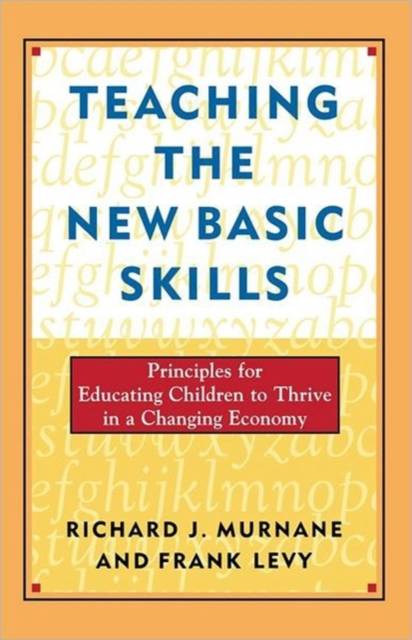
Fifteen years ago, a U.S. high school diploma was a ticket to the middle class. No longer. The skills required to earn a decent income have changed radically. The skills taught in most U.S. schools have not. Today the average 30-year-old person with a high school diploma earns $20,200, and the nation faces a future of growing inequality and division. Teaching the New Basic Skills shows how to avoid such a future. By telling stories of real people in real businesses and real schools, the book shows the skills students need to get decent jobs and how schools can change to teach those skills. Richard Murnane and Frank Levy begin by describing the hiring processes of best practice firms like Northwestern Mutual Life and Honda of America. In today's competitive economy, these firms search for applicants with the New Basic Skills -- the mix of hard and soft skills that all high-wage employers now require. Murnane and Levy then shift their analysis to schools, asking how they can more effectively teach these New Basic Skills. By using case studies the authors show that popular school reform proposals -- higher standards, school choice, national standards, charter schools, more money -- can only be the first half of a solution to the nation's school problem. When they work as advertised, they force a school to change the way it does business. But each of these reforms needs a second half, a strategy for guiding schools toward the changes that raise student skills. The authors show how that strategy rests on five management principles that focus a school on student achievement. These principles grow out of the experiences of real schools doing the dirty work of educational reform: an elementary school in East Austin, Texas organizing low-income Hispanic parents around higher educational performance, an affluent New England community retraining its teachers, the state of Vermont devising new ways to measure the math skills employers require, a Boston high school creating incentives for low-income minority students to devote more time and attention to schoolwork. Superintendents, governors and business leaders agree on the importance of this book as evidenced in the forewords by Robert Galvin, Chairman of Motorola, and Thomas Payzant, school superintendent of Boston. For those who care about the success of U.S. schools, Teaching the New Basic Skills is an optimistic guide to the future and a must read.
Spécifications
Parties prenantes
- Auteur(s) :
- Editeur:
Contenu
- Nombre de pages :
- 272
- Langue:
- Anglais
Caractéristiques
- EAN:
- 9780684827391
- Date de parution :
- 01-09-96
- Format:
- Livre relié
- Format numérique:
- Genaaid
- Dimensions :
- 153 mm x 219 mm
- Poids :
- 471 g


Seulement chez Librairie Club
+ 142 points sur votre carte client de Librairie Club
Cadeau


Les avis
Nous publions uniquement les avis qui respectent les conditions requises. Consultez nos conditions pour les avis.