


- Retrait en 2 heures
- Assortiment impressionnant
- Paiement sécurisé
- Toujours un magasin près de chez vous
- Retrait en 2 heures
- Assortiment impressionnant
- Paiement sécurisé
- Toujours un magasin près de chez vous



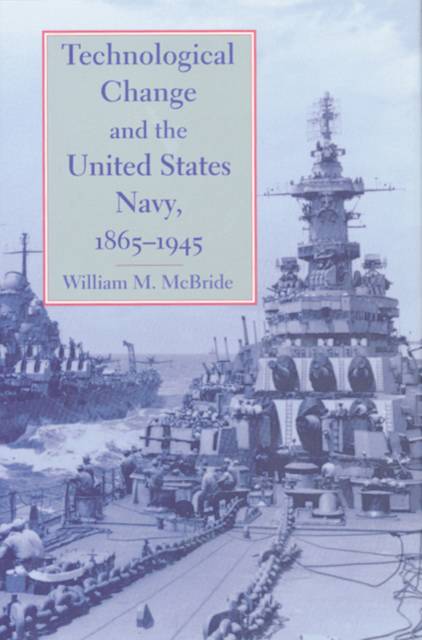
Technological Change and the United States Navy, 1865-1945
William M McBride
65,95 €
+ 131 points
Description
Navies have always been technologically sophisticated, from the ancient world's trireme galleys and the Age of Sail's ships-of-the-line to the dreadnoughts of World War I and today's nuclear-powered aircraft carriers and submarines. Yet each large technical innovation has met with resistance and even hostility from those officers who, adhering to a familiar warrior ethos, have grown used to a certain style of fighting. In Technological Change and the United States Navy, William M. McBride examines how the navy dealt with technological change-from the end of the Civil War through the "age of the battleship"-as technology became more complex and the nation assumed a global role. Although steam engines generally made their mark in the maritime world by 1865, for example, and proved useful to the Union riverine navy during the Civil War, a backlash within the service later developed against both steam engines and the engineers who ran them. Early in the twentieth century the large dreadnought battleship at first met similar resistance from some officers, including the famous Alfred Thayer Mahan, and their industrial and political allies. During the first half of the twentieth century the battleship exercised a dominant influence on those who developed the nation's strategies and operational plans-at the same time that advances in submarines and fixed-wing aircraft complicated the picture and undermined the battleship's superiority. In any given period, argues McBride, some technologies initially threaten the navy's image of itself. Professional jealousies and insecurities, ignorance, and hidebound traditions arguably influenced the officer corps on matters of technology as much as concerns about national security, and McBride contends that this dynamic persists today. McBride also demonstrates the interplay between technological innovation and other influences on naval adaptability-international commitments, strategic concepts, government-industrial relations, and the constant influence of domestic politics. Challenging technological determinism, he uncovers the conflicting attitudes toward technology that guided naval policy between the end of the Civil War and the dawning of the nuclear age. The evolution and persistence of the "battleship navy," he argues, offer direct insight into the dominance of the aircraft-carrier paradigm after 1945 and into the twenty-first century.
Spécifications
Parties prenantes
- Auteur(s) :
- Editeur:
Contenu
- Nombre de pages :
- 352
- Langue:
- Anglais
- Collection :
- Tome:
- n° 27
Caractéristiques
- EAN:
- 9780801898181
- Date de parution :
- 11-12-11
- Format:
- Livre broché
- Format numérique:
- Trade paperback (VS)
- Dimensions :
- 152 mm x 226 mm
- Poids :
- 566 g


Seulement chez Librairie Club
+ 131 points sur votre carte client de Librairie Club
Cadeau


Les avis
Nous publions uniquement les avis qui respectent les conditions requises. Consultez nos conditions pour les avis.