


- Retrait en 2 heures
- Assortiment impressionnant
- Paiement sécurisé
- Toujours un magasin près de chez vous
- Retrait en 2 heures
- Assortiment impressionnant
- Paiement sécurisé
- Toujours un magasin près de chez vous



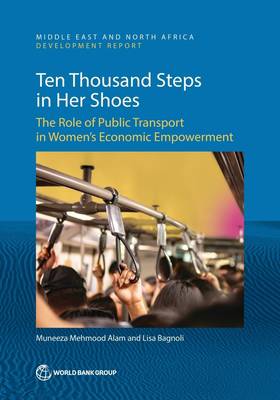
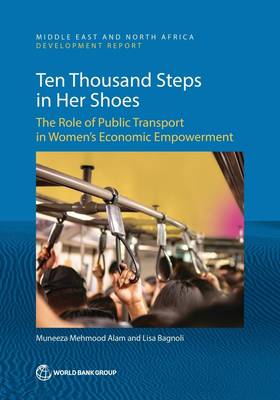
Ten Thousand Steps in Her Shoes
The Role of Public Transport in Women's Economic Empowerment
Muneeza Mehmood Alam, Lisa Bagnoli
65,45 €
+ 130 points
Description
Women around the world face numerous mobility challenges. Public transport can provide many economic benefits that should be enjoyed equally by all users, regardless of gender or life circumstances. In the Middle East and North Africa (MENA) region, women have a higher university enrollment rate than men, yet their labor force participation rate remains low and stagnant. What is preventing them from translating their educational achievements into economic productivity? Is it a matter of personal preference or structural barriers, or is it both? Although public transport systems can play a significant role in women's participation in the labor force globally, this topic has been little explored in the MENA region. 'Ten Thousand Steps in Her Shoes: The Role of Public Transport in Women's Economic Empowerment' examines the role of public transport in women's access to economic opportunities in urban MENA. The book studies the links among mobility, gender, and access to economic opportunities and focuses on three metropolitan areas--Amman, Jordan; Beirut, Lebanon; and Cairo, the Arab Republic of Egypt. Chapters focus on the availability of public transport close to households and employment centers, accessibility to job opportunities, affordability, social and cultural norms, and safety from crime and harassment. Data collected in 2022 reveal that a significant percentage of non-working women in urban MENA lack affordable, comfortable, safe, time-efficient, and reliable transport options, thus preventing them from seeking work. Women can contribute significantly to the economy. Improving public transport and tailoring it to the needs of various communities can help women be economically active. In addition, providing flexible work arrangements that support balancing personal, family, and work lives; protecting women from gender-based discrimination; and offering high-quality childcare options near where people work or live are key. However, gender equity in transport use can be only partially accomplished through well-intentioned policy interventions. Public awareness and endorsement of the benefits of greater gender equality--within households, workplaces, and society at large--are also crucial to advancing women's participation in the economy. The analysis and recommendations presented in this report will help policy makers in Jordan, Lebanon, and Egypt design concrete actions, improve women's mobility through public transport, and create an enabling environment to increase female economic participation.
Spécifications
Parties prenantes
- Auteur(s) :
- Editeur:
Contenu
- Nombre de pages :
- 112
- Langue:
- Anglais
- Collection :
Caractéristiques
- EAN:
- 9781464820915
- Date de parution :
- 18-07-24
- Format:
- Livre broché
- Format numérique:
- Trade paperback (VS)
- Dimensions :
- 173 mm x 251 mm
- Poids :
- 258 g


Seulement chez Librairie Club
+ 130 points sur votre carte client de Librairie Club
Cadeau


Les avis
Nous publions uniquement les avis qui respectent les conditions requises. Consultez nos conditions pour les avis.