


- Retrait en 2 heures
- Assortiment impressionnant
- Paiement sécurisé
- Toujours un magasin près de chez vous
- Retrait en 2 heures
- Assortiment impressionnant
- Paiement sécurisé
- Toujours un magasin près de chez vous



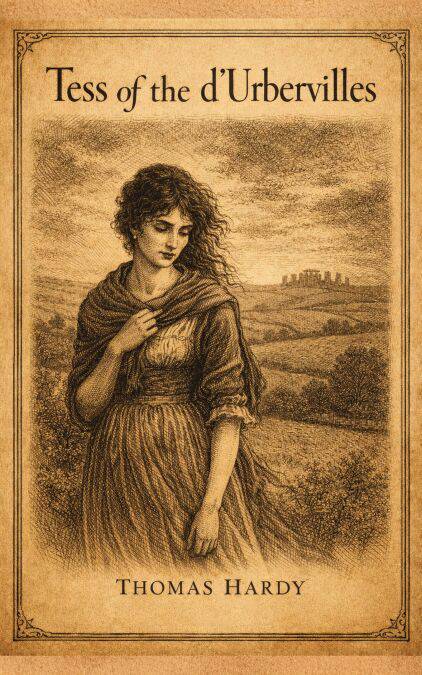
Description
Tess of the d'Urbervilles by Thomas Hardy is a haunting and powerful novel that explores innocence, injustice, fate, and the harsh realities of social convention. First published in 1891, this tragic masterpiece remains one of the most profound and controversial works of nineteenth-century English literature, celebrated for its emotional depth and unflinching critique of Victorian morality.
The story follows Tess Durbeyfield, a young woman of humble origins whose life is irrevocably altered when her family discovers a distant connection to the ancient d'Urberville lineage. Sent to seek kinship and potential advantage from wealthy relatives, Tess becomes entangled in circumstances that shape her destiny in ways she cannot foresee. Hardy traces her journey through moments of hope, heartbreak, resilience, and despair, crafting a portrait of a heroine both fragile and fiercely strong.
Set against the lush yet unforgiving landscapes of rural England, the novel vividly captures the rhythms of agricultural life—the changing seasons, the toil of the fields, and the quiet beauty of the countryside. Nature plays a central role in Tess's story, reflecting both her vitality and her suffering. Hardy's lyrical descriptions create an atmosphere where beauty and tragedy exist side by side, emphasizing the tension between human aspiration and indifferent fate.
At its core, the novel examines themes of purity, social judgment, and the unequal standards imposed upon women. Tess's experiences expose the rigidity and hypocrisy of a society that condemns individuals without understanding their circumstances. Through her, Hardy challenges conventional definitions of virtue and questions the moral codes that govern reputation and honor.
The relationship between Tess and Angel Clare introduces another dimension of longing and idealism. Angel's intellectual aspirations and romantic ideals contrast with the harsh realities Tess faces, revealing the fragile balance between love and expectation. As misunderstandings deepen and choices carry irreversible consequences, the narrative unfolds with an intensity that is both intimate and epic.
Hardy's portrayal of Tess is compassionate and complex. She is neither saint nor symbol, but a deeply human figure shaped by forces beyond her control as well as by her own enduring sense of dignity. The novel confronts the idea of destiny—whether lives are determined by chance, character, or the invisible workings of fate.
Bold in its themes and revolutionary in its challenge to Victorian sensibilities, Tess of the d'Urbervilles sparked controversy upon publication but has since become a cornerstone of literary realism. Its emotional power and moral questioning continue to resonate with modern readers.
Profound, tragic, and beautifully written, this classic novel tells the story of a young woman struggling to preserve her integrity in a world quick to judge and slow to forgive. Through Tess's journey, Thomas Hardy delivers a timeless meditation on love, injustice, and the enduring human spirit.
The story follows Tess Durbeyfield, a young woman of humble origins whose life is irrevocably altered when her family discovers a distant connection to the ancient d'Urberville lineage. Sent to seek kinship and potential advantage from wealthy relatives, Tess becomes entangled in circumstances that shape her destiny in ways she cannot foresee. Hardy traces her journey through moments of hope, heartbreak, resilience, and despair, crafting a portrait of a heroine both fragile and fiercely strong.
Set against the lush yet unforgiving landscapes of rural England, the novel vividly captures the rhythms of agricultural life—the changing seasons, the toil of the fields, and the quiet beauty of the countryside. Nature plays a central role in Tess's story, reflecting both her vitality and her suffering. Hardy's lyrical descriptions create an atmosphere where beauty and tragedy exist side by side, emphasizing the tension between human aspiration and indifferent fate.
At its core, the novel examines themes of purity, social judgment, and the unequal standards imposed upon women. Tess's experiences expose the rigidity and hypocrisy of a society that condemns individuals without understanding their circumstances. Through her, Hardy challenges conventional definitions of virtue and questions the moral codes that govern reputation and honor.
The relationship between Tess and Angel Clare introduces another dimension of longing and idealism. Angel's intellectual aspirations and romantic ideals contrast with the harsh realities Tess faces, revealing the fragile balance between love and expectation. As misunderstandings deepen and choices carry irreversible consequences, the narrative unfolds with an intensity that is both intimate and epic.
Hardy's portrayal of Tess is compassionate and complex. She is neither saint nor symbol, but a deeply human figure shaped by forces beyond her control as well as by her own enduring sense of dignity. The novel confronts the idea of destiny—whether lives are determined by chance, character, or the invisible workings of fate.
Bold in its themes and revolutionary in its challenge to Victorian sensibilities, Tess of the d'Urbervilles sparked controversy upon publication but has since become a cornerstone of literary realism. Its emotional power and moral questioning continue to resonate with modern readers.
Profound, tragic, and beautifully written, this classic novel tells the story of a young woman struggling to preserve her integrity in a world quick to judge and slow to forgive. Through Tess's journey, Thomas Hardy delivers a timeless meditation on love, injustice, and the enduring human spirit.
Spécifications
Parties prenantes
- Auteur(s) :
- Editeur:
Contenu
- Nombre de pages :
- 517
- Langue:
- Anglais
Caractéristiques
- EAN:
- 9787860361854
- Date de parution :
- 21-02-26
- Format:
- Ebook
- Protection digitale:
- Digital watermarking
- Format numérique:
- ePub


Seulement chez Librairie Club
Cadeau


Les avis
Nous publions uniquement les avis qui respectent les conditions requises. Consultez nos conditions pour les avis.