


- Retrait en 2 heures
- Assortiment impressionnant
- Paiement sécurisé
- Toujours un magasin près de chez vous
- Retrait en 2 heures
- Assortiment impressionnant
- Paiement sécurisé
- Toujours un magasin près de chez vous



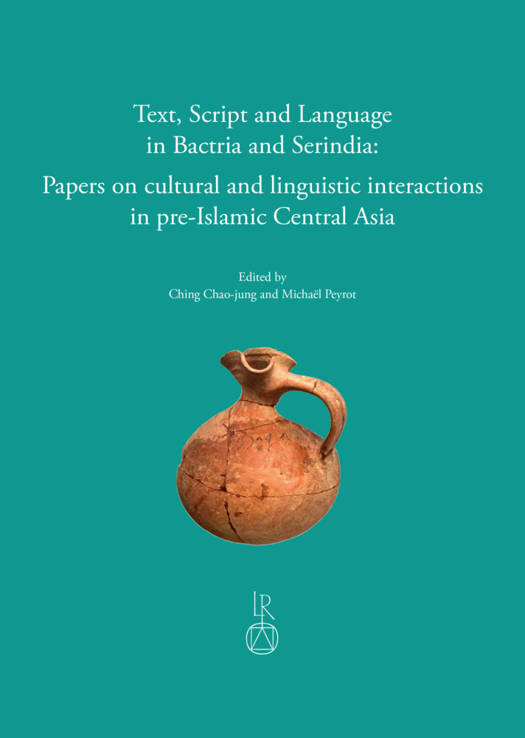
Text, Script and Language in Bactria and Serindia
Papers on Cultural and Linguistic Interactions in Pre-Islamic Central Asia
122,95 €
+ 245 points
Description
The book is addressed primarily to a scholarly audience. It unites ten articles on history, palaeography and linguistics in Central Asia. Ching Chao-jung discusses the translation procedure of Buddhist Sanskrit texts into Chinese and the consequences this has for the interpretation of the geographical terms Bactria and Tukharistan. Alessandro Del Tomba makes an edition and comparative study of the Khotanese and Sanskrit Mahāvaidehaghr̥ta, a medical text that is very difficult to interpret. The Sanskrit text is very corrupt and a detailed analysis and reconstruction are made. Federico Dragoni studies the origin and development of the so-called subscript hook of Khotanese Brāhmī, which is a genuinely Khotanese addition to the Brāhmī script that was originally designed for Sanskrit. Pavel B. Lurje discusses the history of the decipherment of the "unknown script" of Bactria, with important additions and corrections. Francesca Michetti studies the origin on Bactrian final -o by looking systematically at the oldest Bactrian outcomes of Old Iranian endings. Miyamoto Ryoichi studies the gods Wakhsh and Rām-sēt in Bactrian documents. Ogihara Hirotoshi gives a re-analysis of the ownership clause in Tumshuqese sale contracts, which are very difficult to decipher, and where each new reading and interpretation changes our understanding of the poorly attested Tumshuqese language. Michaël Peyrot investigates the Brāhmī diacritic ä, which is found in Tocharian and Khotanese, and constitutes an addition in these two varieties of Brāhmī compared to the original Brāhmī variants for Sanskrit. Niels Schoubben discusses three cases of loanwords between Gāndhārī and Eastern Middle Iranian and offers an annotated translation of a Gāndhārī sale contract written on silk. Nicholas Sims-Williams makes a new edition of the Bactrian inscription of Ayrtam.
Spécifications
Parties prenantes
- Editeur:
Contenu
- Nombre de pages :
- 350
- Langue:
- Anglais
- Collection :
Caractéristiques
- EAN:
- 9783752009248
- Date de parution :
- 12-02-26
- Format:
- Livre relié
- Format numérique:
- Genaaid
- Dimensions :
- 170 mm x 240 mm

Seulement chez Librairie Club
+ 245 points sur votre carte client de Librairie Club
Cadeau


Les avis
Nous publions uniquement les avis qui respectent les conditions requises. Consultez nos conditions pour les avis.