


- Retrait en 2 heures
- Assortiment impressionnant
- Paiement sécurisé
- Toujours un magasin près de chez vous
- Retrait en 2 heures
- Assortiment impressionnant
- Paiement sécurisé
- Toujours un magasin près de chez vous



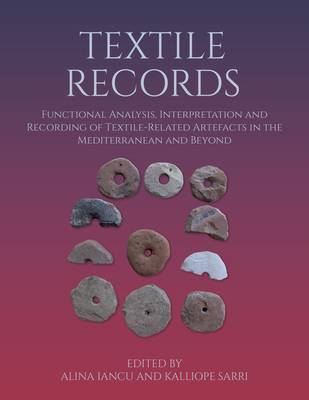
Textile Records
Functional Analysis, Interpretation and Recording of Textile-Related Artefacts in the Mediterranean and Beyond
121,45 €
+ 242 points
Description
Examines prehistoric and ancient textiles, their archaeological evidence, and proposes improved methods for recording and publishing findings.
Since early prehistoric times, textiles have been essential to human life, providing protection, enabling social display, furnishing homes, supporting transportation and warfare, and fulfilling countless other needs. Although textiles rarely survive except under exceptional environmental conditions, a growing body of archaeological evidence bears witness to their fundamental importance and to the sophisticated crafts that produced them. Fragmentary fabrics, mineralised textiles on metal objects, carbonised fibres and textile imprints offer valuable data on raw materials, techniques and textile quality in the past. Equally important, the rich array of tools recovered from archaeological contexts reveals the techniques used by prehistoric and ancient craftspeople to transform fibres into finished products.
Despite their central role in past societies, textiles and textile-related artefacts remain significantly underrepresented in archaeological literature compared to other categories of finds. Long regarded as a modest domestic craft primarily associated with women, they have suffered from gender bias, general scholarly neglect and limited specialist knowledge. As a result, their publication has often been inconsistent, prone to confusion and subject to misinterpretation.
Recent advances in archaeological textile studies now provide a strong foundation for reassessing earlier research and for developing more rigorous and systematic approaches to the recording, analysis and publication of these artefacts. This volume brings together archaeologists and textile specialists to examine the history of textile recording in archaeology and to propose new methodologies for integrating textile finds into mainstream archaeological publications with the same scholarly rigour and public accessibility granted to other categories of material culture.
Since early prehistoric times, textiles have been essential to human life, providing protection, enabling social display, furnishing homes, supporting transportation and warfare, and fulfilling countless other needs. Although textiles rarely survive except under exceptional environmental conditions, a growing body of archaeological evidence bears witness to their fundamental importance and to the sophisticated crafts that produced them. Fragmentary fabrics, mineralised textiles on metal objects, carbonised fibres and textile imprints offer valuable data on raw materials, techniques and textile quality in the past. Equally important, the rich array of tools recovered from archaeological contexts reveals the techniques used by prehistoric and ancient craftspeople to transform fibres into finished products.
Despite their central role in past societies, textiles and textile-related artefacts remain significantly underrepresented in archaeological literature compared to other categories of finds. Long regarded as a modest domestic craft primarily associated with women, they have suffered from gender bias, general scholarly neglect and limited specialist knowledge. As a result, their publication has often been inconsistent, prone to confusion and subject to misinterpretation.
Recent advances in archaeological textile studies now provide a strong foundation for reassessing earlier research and for developing more rigorous and systematic approaches to the recording, analysis and publication of these artefacts. This volume brings together archaeologists and textile specialists to examine the history of textile recording in archaeology and to propose new methodologies for integrating textile finds into mainstream archaeological publications with the same scholarly rigour and public accessibility granted to other categories of material culture.
Spécifications
Parties prenantes
- Editeur:
Contenu
- Nombre de pages :
- 224
- Langue:
- Anglais
- Collection :
Caractéristiques
- EAN:
- 9798888572139
- Date de parution :
- 17-07-26
- Format:
- Livre broché
- Format numérique:
- Trade paperback (VS)
- Dimensions :
- 216 mm x 279 mm

Seulement chez Librairie Club
+ 242 points sur votre carte client de Librairie Club
Cadeau


Les avis
Nous publions uniquement les avis qui respectent les conditions requises. Consultez nos conditions pour les avis.