


- Retrait en 2 heures
- Assortiment impressionnant
- Paiement sécurisé
- Toujours un magasin près de chez vous
- Retrait en 2 heures
- Assortiment impressionnant
- Paiement sécurisé
- Toujours un magasin près de chez vous



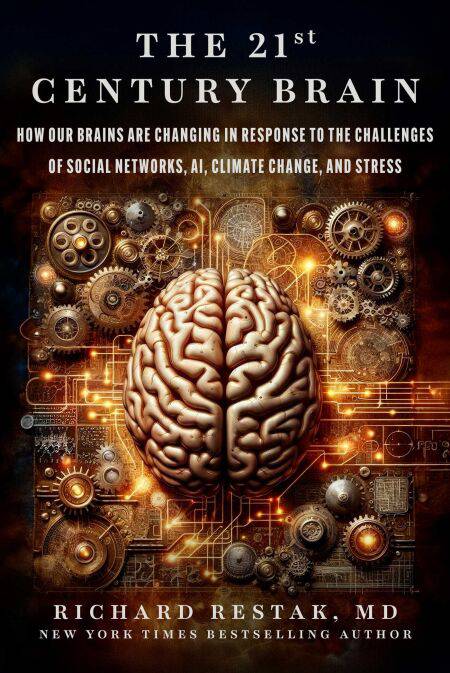
The 21st Century Brain EBOOK
How Our Brains Are Changing in Response to the Challenges of Social Networks, AI, Climate Change, and Stress
Richard Restak
Ebook | Anglais
24,59 €
+ 24 points
Format
Description
Discover the Influences of Social Media, Artificial Intelligence (AI), Climate Change, Stress, and More on Our Brains and Behavior Unique to the Twenty-first Century.
During the past twenty-five years, we’ve encountered powerful influences for good and bad on brain function and even brain structure. Consider the changes that have already taken place in how we communicate. During the last half of the twentieth century, images displaced words as the common parlance of communication. On the nightly news we’ve become accustomed to watching images drawn from video cameras used by law enforcement and, thanks to a proliferating number of cellphones, everyday use. Yet AI is turning the traditional dynamic that images carry more weight than words (“seeing is believing”) upside down because we now have to question the authenticity of images. We are finding ourselves forced to adjust to a world where what we see is not always what’s really happening.
Next, consider the effects of our changing environment on our brains and our behavior. There is good reason to believe that a link exists between an increase in global temperature and suicide. Wildfires, becoming more and more common thanks to climate change, affect air quality, which is often undetectable by the average person until it reaches toxic levels. Studies have proven that wildfire smoke is affecting our brains and potentially causing disease.
Perhaps the greatest twenty-first century contributor to changes in brain function is stress. Due to many factors explored in the book, it’s likely that levels of mental and emotional instability are on the horizon that can only be fully understood by focusing on the changes in the human brain brought about by these unparalleled levels of stress.
The brain is always evolving. The 21st Century Brain will describe those influences on brain and behavior that are unique to this century, as well as available preventive measures to mitigate some of these factors. This book is a quintessential study on how our brains are uniquely changing in the twenty-first century, as well as a guide to the personal and collective measures that can be taken to eliminate these factors or reduce their impact.
During the past twenty-five years, we’ve encountered powerful influences for good and bad on brain function and even brain structure. Consider the changes that have already taken place in how we communicate. During the last half of the twentieth century, images displaced words as the common parlance of communication. On the nightly news we’ve become accustomed to watching images drawn from video cameras used by law enforcement and, thanks to a proliferating number of cellphones, everyday use. Yet AI is turning the traditional dynamic that images carry more weight than words (“seeing is believing”) upside down because we now have to question the authenticity of images. We are finding ourselves forced to adjust to a world where what we see is not always what’s really happening.
Next, consider the effects of our changing environment on our brains and our behavior. There is good reason to believe that a link exists between an increase in global temperature and suicide. Wildfires, becoming more and more common thanks to climate change, affect air quality, which is often undetectable by the average person until it reaches toxic levels. Studies have proven that wildfire smoke is affecting our brains and potentially causing disease.
Perhaps the greatest twenty-first century contributor to changes in brain function is stress. Due to many factors explored in the book, it’s likely that levels of mental and emotional instability are on the horizon that can only be fully understood by focusing on the changes in the human brain brought about by these unparalleled levels of stress.
The brain is always evolving. The 21st Century Brain will describe those influences on brain and behavior that are unique to this century, as well as available preventive measures to mitigate some of these factors. This book is a quintessential study on how our brains are uniquely changing in the twenty-first century, as well as a guide to the personal and collective measures that can be taken to eliminate these factors or reduce their impact.
Spécifications
Parties prenantes
- Auteur(s) :
- Editeur:
Contenu
- Nombre de pages :
- 264
- Langue:
- Anglais
Caractéristiques
- EAN:
- 9781510784161
- Date de parution :
- 17-11-25
- Format:
- Ebook
- Protection digitale:
- Adobe DRM
- Format numérique:
- ePub


Seulement chez Librairie Club
+ 24 points sur votre carte client de Librairie Club
Cadeau


Les avis
Nous publions uniquement les avis qui respectent les conditions requises. Consultez nos conditions pour les avis.