


- Retrait en 2 heures
- Assortiment impressionnant
- Paiement sécurisé
- Toujours un magasin près de chez vous
- Retrait en 2 heures
- Assortiment impressionnant
- Paiement sécurisé
- Toujours un magasin près de chez vous



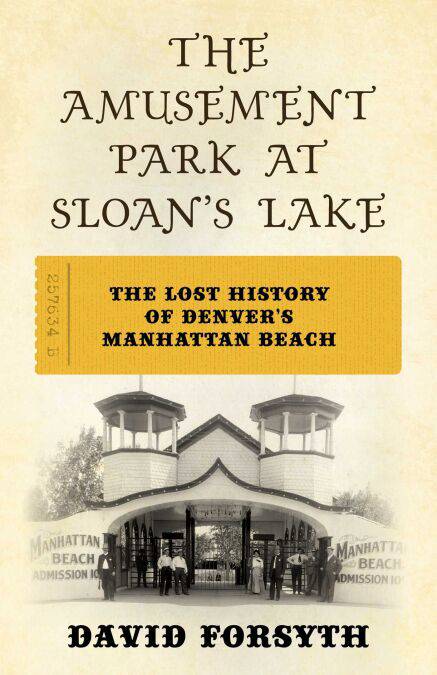
The Amusement Park at Sloan's Lake EBOOK
The Lost History of Denver's Manhattan Beach
David Forsyth
Ebook | Anglais
20,12 €
+ 20 points
Format
Description
Sloan’s Lake had a long history of entertaining Denver residents with boating, fishing, swimming, and a steamboat canal built in the 1870s. In 1890, Adam Graff and his partners opened a new park on the shore of Sloan’s Lake that would eventually become Manhattan Beach. Originally created as a summer pleasure resort with a highly respected summer theater, boating, fishing, and music, the park quickly expanded to include typical amusement attractions, including Denver’s first roller coaster and merry-go-round. When the concept of the amusement park was created in 1895 with the opening of Sea Lion Park on Coney Island in New York, Manhattan Beach was already a step ahead of rivals Elitch Gardens and Arlington Park. Operating from 1890 to 1914, Manhattan Beach Amusement Park was the first true amusement park in Denver and was enjoyed by residents and visitors for nearly twenty-five years as Denver tried to shake off its image as a dusty cow town from gold mining days and fought to be seen as a sophisticated and well-developed city.
Manhattan Beach played an important role in amusement park history in the United States, but its full story has never before been told. Manhattan Beach’s story is an important addition to both Denver and Colorado’s history as it reflects the city’s growth during the late 1800s and early 1900s. The park has also inspired many legends, the most famous of which concerns Roger the Elephant, who arrived at Manhattan Beach in 1891, and his supposed death and burial in a swamp near the park. Much of what has been told about Manhattan Beach in the years since it closed is more myth than fact, as this book demonstrates. After the amusement park closed in 1914, the city of Denver purchased the land and turned it into Sloan’s Lake Park, which continues to be a gathering place for Denverites.
Manhattan Beach played an important role in amusement park history in the United States, but its full story has never before been told. Manhattan Beach’s story is an important addition to both Denver and Colorado’s history as it reflects the city’s growth during the late 1800s and early 1900s. The park has also inspired many legends, the most famous of which concerns Roger the Elephant, who arrived at Manhattan Beach in 1891, and his supposed death and burial in a swamp near the park. Much of what has been told about Manhattan Beach in the years since it closed is more myth than fact, as this book demonstrates. After the amusement park closed in 1914, the city of Denver purchased the land and turned it into Sloan’s Lake Park, which continues to be a gathering place for Denverites.
Spécifications
Parties prenantes
- Auteur(s) :
- Editeur:
Contenu
- Nombre de pages :
- 256
- Langue:
- Anglais
Caractéristiques
- EAN:
- 9781493076987
- Date de parution :
- 31-03-2024
- Format:
- Ebook
- Protection digitale:
- Adobe DRM
- Format numérique:
- ePub


Seulement chez Librairie Club
+ 20 points sur votre carte client de Librairie Club
Cadeau


Les avis
Nous publions uniquement les avis qui respectent les conditions requises. Consultez nos conditions pour les avis.