


- Retrait en 2 heures
- Assortiment impressionnant
- Paiement sécurisé
- Toujours un magasin près de chez vous
- Retrait en 2 heures
- Assortiment impressionnant
- Paiement sécurisé
- Toujours un magasin près de chez vous



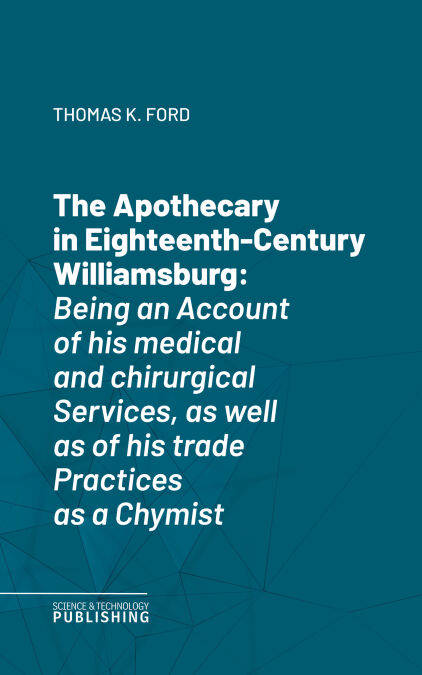
The Apothecary in Eighteenth-Century Williamsburg EBOOK
Being an Account of his medical and chirurgical Services, as well as of his trade Practices as a Chymist
Ford
Ebook | Anglais
19,99 €
+ 19 points
Format
Description
The Apothecary in Eighteenth-Century Williamsburg: Being an Account of his Medical and Chirurgical Services, as well as of his Trade Practices as a Chymist offers a vivid and meticulously researched portrait of the apothecary’s essential role in colonial American society. Drawing on historical records, period illustrations, and firsthand accounts, this book transports readers to the bustling streets of Williamsburg, Virginia, during the 1700s, where the apothecary’s shop stood as a vital center for health, healing, and community life. The narrative delves into the daily responsibilities of the apothecary, who was far more than a simple dispenser of medicines. He was a trusted medical practitioner, performing minor surgeries, setting bones, and offering advice on a wide range of ailments. The book explores the apothecary’s dual identity as both a healer and a businessman, detailing the intricate processes of compounding remedies, distilling tinctures, and preparing salves from imported and local ingredients. Readers gain insight into the apothecary’s training, the tools of his trade, and the challenges he faced in a world where medical knowledge was evolving and often contested. Richly illustrated with period engravings and photographs of authentic artifacts, the book also examines the broader context of eighteenth-century medicine, including the influence of European medical traditions, the relationship between apothecaries and physicians, and the impact of new scientific discoveries. Anecdotes and case studies bring to life the patients who sought help for everything from fevers and wounds to childbirth and epidemics. Through its engaging prose and attention to historical detail, The Apothecary in Eighteenth-Century Williamsburg illuminates the complexities of colonial healthcare and the indispensable role of the apothecary in the daily lives of Williamsburg’s residents. It is an invaluable resource for history enthusiasts, students of early American medicine, and anyone fascinated by the intersection of science, commerce, and community in the colonial era.
Spécifications
Parties prenantes
- Auteur(s) :
- Editeur:
Contenu
- Langue:
- Anglais
Caractéristiques
- EAN:
- 9782528115930
- Date de parution :
- 31-08-25
- Format:
- Ebook
- Protection digitale:
- /
- Format numérique:
- ePub


Seulement chez Librairie Club
+ 19 points sur votre carte client de Librairie Club
Cadeau


Les avis
Nous publions uniquement les avis qui respectent les conditions requises. Consultez nos conditions pour les avis.