


- Retrait en 2 heures
- Assortiment impressionnant
- Paiement sécurisé
- Toujours un magasin près de chez vous
- Retrait gratuit dans votre magasin Club
- 7.000.0000 titres dans notre catalogue
- Payer en toute sécurité
- Toujours un magasin près de chez vous



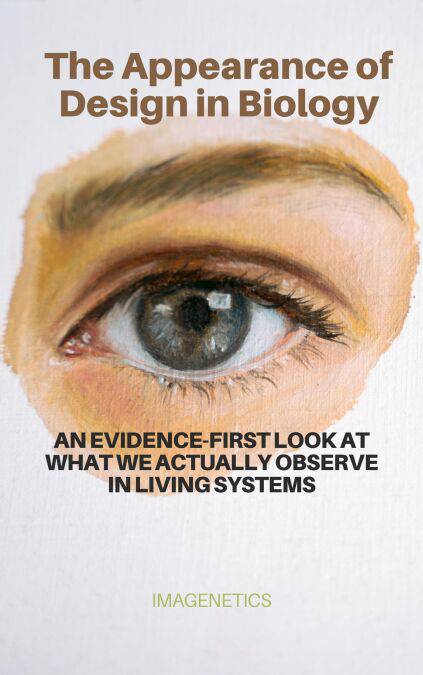
Description
What if everything you've been taught about biology's origins is based on a philosophical assumption rather than scientific evidence?
For over 400 years, scientists have examined living systems with increasingly sophisticated technology—from the first microscopes to today's atomic-resolution imaging. And at every step, they've discovered something remarkable: biology looks engineered. Not vaguely. Not metaphorically. But precisely, systematically, by every standard engineers use to recognize design.
"The Appearance of Design in Biology" takes you on a journey through biological systems examined from multiple engineering perspectives:
From computer scientists: DNA isn't just a molecule—it's a sophisticated information storage and processing system with error correction, compression algorithms, and regulatory networks that look exactly like computer code because they operate on the same principles.
From mechanical engineers: Your cells contain literal machines—rotary motors spinning at 100,000 RPM with 95% efficiency, walking proteins delivering cargo, and programmable assemblers building proteins to specification. These aren't metaphors; they're machines by every engineering definition.
From control systems engineers: Your body runs thousands of feedback control loops simultaneously—maintaining temperature, regulating blood sugar, controlling gene expression—using the same control theory principles taught in engineering courses.
From materials scientists: Biological materials like bone and spider silk achieve properties that exceed human engineering through hierarchical structures that materials scientists now study and copy because they're genuinely optimized.
From optical engineers: Butterfly wings contain photonic crystals. Moth eyes have anti-reflective coatings. Mantis shrimp eyes have circular polarizers—sophisticated optical devices that engineers are trying to replicate.
This book isn't about faith or religion. It's about evidence and critical thinking. It asks one simple question: What does the evidence actually suggest?
You'll discover that:
Engineers from multiple disciplines explicitly recognize design principles in biology—and successfully copy them The more closely we examine living systems, the more sophisticated they appear (not simpler, as you'd expect from random processes) The same characteristics that indicate design in archaeology, cryptography, and engineering all appear in biology The only reason we say "appearance of design" instead of "design" is because of a philosophical framework called methodological naturalismBut here's the challenge: Can a method designed to find only natural causes make truth claims about whether design exists? Or does its conclusion reflect the method's built-in assumptions rather than the evidence?
Written for intelligent young adults (ages 15-25) who love science and aren't afraid to question assumptions. No background in biology required—just curiosity and intellectual honesty.
Whether you're a student, a budding scientist, or someone who wants to think more critically about origins, this book will equip you to ask better questions and follow evidence wherever it leads—even when it challenges what you've been taught.
What does the evidence suggest? Read it and decide for yourself.
Spécifications
Parties prenantes
- Auteur(s) :
- Editeur:
Contenu
- Langue:
- Anglais
Caractéristiques
- EAN:
- 9798233749773
- Date de parution :
- 27-12-25
- Format:
- Ebook
- Protection digitale:
- /
- Format numérique:
- ePub



Seulement chez Librairie Club
+ 5 points sur votre carte client de Librairie Club
Cadeau

Cadeau


Les avis
Nous publions uniquement les avis qui respectent les conditions requises. Consultez nos conditions pour les avis.