


- Retrait en 2 heures
- Assortiment impressionnant
- Paiement sécurisé
- Toujours un magasin près de chez vous
- Retrait gratuit dans votre magasin Club
- 7.000.0000 titres dans notre catalogue
- Payer en toute sécurité
- Toujours un magasin près de chez vous



34,95 €
+ 69 points
Description
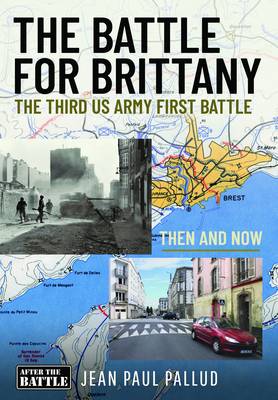
An account of the U.S. breakout into Brittany in 1944, detailing advances, sieges, and strategic outcomes.
At the end of July, Operation 'Cobra' broke through the German defences and the American leaders rushed through Coutances and Avranches, and took the Pontaubault bridge on the 31st. On August 1, the VIII Corps had three crossing sites over the Sée River and four over the Sélune, the routes to enter Brittany were open.
That day, as the 4th Armored Division thrust from Pontaubault toward Rennes, Lieutenant Georges S. Patton's Third US Army became operational.
To secure Brittany, Patton's plan was to unleash armoured columns in the peninsula, the 4th Armored Division to drive through Rennes to Quiberon, and the 6th Armored Division to rush all the way to Brest. A third column, Task Force A, was to secure the vital railroad that ran along the north shore.
The 4th Armored Division reached Nantes on August 6, to find the port facilities in ruins. On the northern shore of the peninsula, Task Force A encountered fierce resistance at Saint-Malo. While the task force continued westwards, the 83rd Division took on the siege and it took four weeks of repeated attacks, and the engagement of strong artillery forces and several heavy air raids, to obtain the surrender of the German fortress.
The Americans faced a similar dogged defence at Brest and it took six weeks of fighting to obtain the surrender of Generalleutnant Hermann Ramcke on September 19. The Americans lost 10,000 killed and wounded in the battle, but Brest, as well as its harbour facilities, were destroyed.
On September 13, after the extent of the reconstruction and works necessary to rehabilitate the harbour had been looked at, it was decided to abandon all repair work there. The serious Allied problem of port capacity persisted until November, when the Antwerp facilities became available.
The charge was later made that the employment of three divisions and valuable transports and supplies to defeat the German garrison at Brest but the resources used there, quite small when compared to the total effort, could hardly have altered the pattern of the quick advance eastwards.
At the end of July, Operation 'Cobra' broke through the German defences and the American leaders rushed through Coutances and Avranches, and took the Pontaubault bridge on the 31st. On August 1, the VIII Corps had three crossing sites over the Sée River and four over the Sélune, the routes to enter Brittany were open.
That day, as the 4th Armored Division thrust from Pontaubault toward Rennes, Lieutenant Georges S. Patton's Third US Army became operational.
To secure Brittany, Patton's plan was to unleash armoured columns in the peninsula, the 4th Armored Division to drive through Rennes to Quiberon, and the 6th Armored Division to rush all the way to Brest. A third column, Task Force A, was to secure the vital railroad that ran along the north shore.
The 4th Armored Division reached Nantes on August 6, to find the port facilities in ruins. On the northern shore of the peninsula, Task Force A encountered fierce resistance at Saint-Malo. While the task force continued westwards, the 83rd Division took on the siege and it took four weeks of repeated attacks, and the engagement of strong artillery forces and several heavy air raids, to obtain the surrender of the German fortress.
The Americans faced a similar dogged defence at Brest and it took six weeks of fighting to obtain the surrender of Generalleutnant Hermann Ramcke on September 19. The Americans lost 10,000 killed and wounded in the battle, but Brest, as well as its harbour facilities, were destroyed.
On September 13, after the extent of the reconstruction and works necessary to rehabilitate the harbour had been looked at, it was decided to abandon all repair work there. The serious Allied problem of port capacity persisted until November, when the Antwerp facilities became available.
The charge was later made that the employment of three divisions and valuable transports and supplies to defeat the German garrison at Brest but the resources used there, quite small when compared to the total effort, could hardly have altered the pattern of the quick advance eastwards.
Spécifications
Parties prenantes
- Auteur(s) :
- Editeur:
Contenu
- Nombre de pages :
- 120
- Langue:
- Anglais
Caractéristiques
- EAN:
- 9781036126162
- Date de parution :
- 14-05-26
- Format:
- Livre relié
- Format numérique:
- Genaaid
- Dimensions :
- 171 mm x 248 mm
- Poids :
- 606 g


Seulement chez Librairie Club
+ 69 points sur votre carte client de Librairie Club
Cadeau

Cadeau


Les avis
Nous publions uniquement les avis qui respectent les conditions requises. Consultez nos conditions pour les avis.