


- Retrait en 2 heures
- Assortiment impressionnant
- Paiement sécurisé
- Toujours un magasin près de chez vous
- Retrait gratuit dans votre magasin Club
- 7.000.0000 titres dans notre catalogue
- Payer en toute sécurité
- Toujours un magasin près de chez vous



55,45 €
+ 110 points
Format
Description
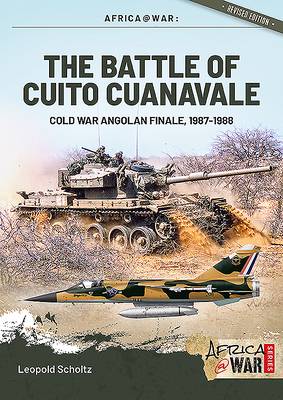
In the broad history of the Cold War, the Battle of Cuito Cuanavale was the climax of a far-off, but nonetheless important African war. It was waged between the apartheid South African Defence Force (SADF) and the armed forces of the communist MPLA government in Angola and the People's Republic of Cuba. Led by Soviet generals, the MPLA embarked on a grand offensive in order to knock out the pro-Western rebel movement UNITA in southeastern Angola. As UNITA's survival was crucial to South Africa's military strategy in fighting its own counter-insurgency war against the South West African rebel movement SWAPO, the SADF stepped in with a single mechanised brigade and broke the back of the overwhelming MPLA offensive. The MPLA forces were subsequently driven back over a hundred kilometres, before the SADF advance was finally stopped just short of the town of Cuito Cuanavale. Since then, a hot war of words have been waged about who actually won. In this book, a South African military historian and retired journalist examines the campaign, the adversaries, and their achievements on the basis of his research in SADF archives. His scrupulous attempt at objectivity results in interesting conclusions. While the MPLA lost hands down, he posits a draw between the Cubans and the SADF. Although having been a South African reservist officer himself, he has critical words for the SADF leadership. Many misunderstandings, some of which were purposefully created by Cuban dictator Fidel Castro, are put to rest. While not sharing Castro's political beliefs, he acknowledges Castro's military acumen and political savvy in extricating his country from an unwinnable war while smelling of roses. The analysis contains many lessons about mechanised warfare in the African context from which both laymen and military professionals alike may learn.
Spécifications
Parties prenantes
- Auteur(s) :
- Editeur:
Contenu
- Nombre de pages :
- 72
- Langue:
- Anglais
- Collection :
Caractéristiques
- EAN:
- 9781913336073
- Date de parution :
- 10-02-20
- Format:
- Livre broché
- Format numérique:
- Trade paperback (VS)
- Dimensions :
- 211 mm x 295 mm
- Poids :
- 272 g


Seulement chez Librairie Club
+ 110 points sur votre carte client de Librairie Club
BLACK FRIDAY

BLACK FRIDAY

INSPIRATION


Les avis
Nous publions uniquement les avis qui respectent les conditions requises. Consultez nos conditions pour les avis.