


- Retrait en 2 heures
- Assortiment impressionnant
- Paiement sécurisé
- Toujours un magasin près de chez vous
- Retrait en 2 heures
- Assortiment impressionnant
- Paiement sécurisé
- Toujours un magasin près de chez vous



9,99 €
+ 9 points
Description
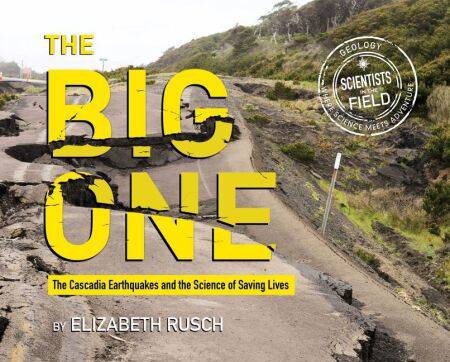
No one ever thought the Pacific Northwest was due for an earthquake, let alone a catastrophic one. But geologists are transforming our understanding of the grave dangers the population in the region of Cascadia face—will there be a big one? And what can be done to save lives?
America’s Pacific Northwest has relatively few earthquakes—only a handful each year that cause even moderately noticeable shaking. But a couple decades ago, scientists discovered a geological feature—the Cascadia Subduction Zone—running along the coast that in other parts of the world regularly triggers massive earthquakes of 8.0 magnitude and higher. Were there once massive earthquakes in this part of the world? Geologists think there were. Now a small group of scientists are studying things that you might not think have anything to do with earthquakes—marsh soil, ocean sediments, landslide debris, and ghost forests—and they have reason to believe that the Pacific Northwest is likely not as idyllic as it was once assumed. The population is likely in grave danger of a massive earthquake at some point. What can be done? The big one can’t be stopped, but scientists are working tirelessly to learn as much as they can to prepare and promote earthquake safety.
America’s Pacific Northwest has relatively few earthquakes—only a handful each year that cause even moderately noticeable shaking. But a couple decades ago, scientists discovered a geological feature—the Cascadia Subduction Zone—running along the coast that in other parts of the world regularly triggers massive earthquakes of 8.0 magnitude and higher. Were there once massive earthquakes in this part of the world? Geologists think there were. Now a small group of scientists are studying things that you might not think have anything to do with earthquakes—marsh soil, ocean sediments, landslide debris, and ghost forests—and they have reason to believe that the Pacific Northwest is likely not as idyllic as it was once assumed. The population is likely in grave danger of a massive earthquake at some point. What can be done? The big one can’t be stopped, but scientists are working tirelessly to learn as much as they can to prepare and promote earthquake safety.
This compelling book for young readers, an entry in the award-winning Scientists in the Field series, uncovers the earth science that could save a generation:
Plate Tectonics: Discover the powerful forces that move continents, create mountains, and set the stage for one of the biggest earthquakes in modern history. Tsunami Science: Follow the clues from a mysterious ‘orphan tsunami’ that struck Japan in 1700 to learn how scientists pinpointed the last Big One. Earthquake Preparedness: Learn from the experts what can be done to reinforce buildings, create early warning systems, and what your family can do to stay safe when the ground shakes. Scientists in the Field: Meet the real-life geologists who study everything from ghost forests to ocean-floor mud to solve one of Earth’s most urgent puzzles.Spécifications
Parties prenantes
- Auteur(s) :
- Editeur:
Contenu
- Nombre de pages :
- 80
- Langue:
- Anglais
- Collection :
Caractéristiques
- EAN:
- 9780358335795
- Date de parution :
- 17-08-20
- Format:
- Ebook
- Protection digitale:
- Adobe DRM
- Format numérique:
- ePub


Seulement chez Librairie Club
+ 9 points sur votre carte client de Librairie Club
Cadeau


Les avis
Nous publions uniquement les avis qui respectent les conditions requises. Consultez nos conditions pour les avis.