


- Retrait en 2 heures
- Assortiment impressionnant
- Paiement sécurisé
- Toujours un magasin près de chez vous
- Retrait en 2 heures
- Assortiment impressionnant
- Paiement sécurisé
- Toujours un magasin près de chez vous



49,95 €
+ 99 points
Description
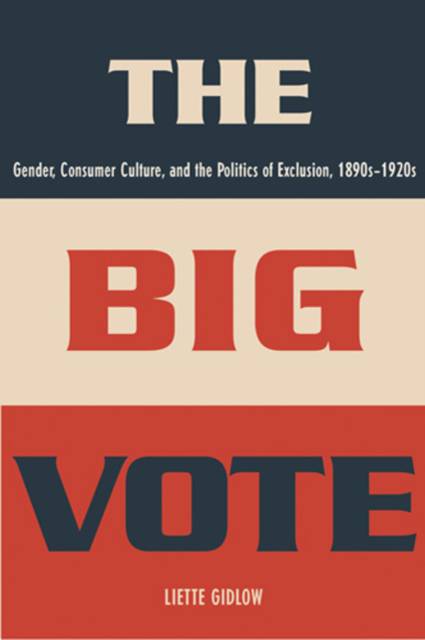
Perhaps curiously, though in cases intentionally (as in the Jim Crow South), Progressive reforms had the effect of lowering voter turnout. Also curiously--given the intensity of the women's suffrage movement--the entry of women into the political arena after August, 1920, did not in and of itself activate women as a group as participants. With women qualified to vote, turnout as a percentage of those enfranchised still remained disappointingly low. Gidlow explores the ensuing crusade to "get out the vote," originally the work of the new League of Women Voters, and in it finds a cross-hatching of assumptions, tactics, and styles that come together in the concept of "commodifying politics." Her study focuses on (1) the rise of middle-class nonpartisanship, (2) the notion of discriminating citizenship, and (3) the wholesale trend toward mimicking the marketplace in order to make political "sales" (political entrepreneurship). Adding a chapter to the story of "antipartyism" in American political history, she notes that members of the postwar American middle class--self-conscious consumers, firm believers in education, rational choice, and the value of "expert advice"--turned away from parties and the frauds, smoky rooms, ward heelers, etc., white-collar families associated with them. Campaigning as good citizens to get voters to the polls, the League and its allies revealingly tried harder with the "right sort" of people--the same sort of people who were smart shoppers. Mobilizing them involved department-store solicitation; billboard, magazine, newspaper, and radio advertising; and training seminars familiar to the business world. Conflating nonpartisanship, citizenship, and entrepreneurship, the middle class believed itself the best suited to make political decisions because best prepared for other kinds of decisions--like what to buy. Interestingly, all the hard work had no real effect on voter turnout. But the League had as much concern with smart voting as aggregate figures. Consumers had the choice of not buying, and times were good. Interesting as well, the ideal hierarchy that the League preached surrendered to men the privilege of being more "expert" than women. Nonetheless giving many women their first taste of political activity, experience, and education, the League and its movement involved women in this manner of politics as importantly as women acted as consumers (as partners with men, as consultants on a large purchase), with the level of responsibility apparently on the increase. If middle-class women deferred, they in any event had no doubt that they were members of the middle class. Perhaps they only seemed to defer--in a way later captured in a film entitled "It's a Woman's World." "[Gidlow] deals thoroughly and imaginatively with a neglected but important episode in American political history: the "Get-Out-the-Vote" movement in the University States during the 1920s." --Michael McGerr, Indiana University "An exciting new direction in political history . . . [Gidlow reads the campaitgns the way that a cultural historian might, but with the discipline and knowledge of the field that comes from . . . political history." --Paula Baker, Ohio State University
Spécifications
Parties prenantes
- Auteur(s) :
- Editeur:
Contenu
- Nombre de pages :
- 280
- Langue:
- Anglais
- Collection :
Caractéristiques
- EAN:
- 9780801886379
- Date de parution :
- 01-03-2007
- Format:
- Livre broché
- Format numérique:
- Trade paperback (VS)
- Dimensions :
- 152 mm x 229 mm
- Poids :
- 417 g



Seulement chez Librairie Club
+ 99 points sur votre carte client de Librairie Club
Cadeau


Les avis
Nous publions uniquement les avis qui respectent les conditions requises. Consultez nos conditions pour les avis.