


- Retrait en 2 heures
- Assortiment impressionnant
- Paiement sécurisé
- Toujours un magasin près de chez vous
- Retrait en 2 heures
- Assortiment impressionnant
- Paiement sécurisé
- Toujours un magasin près de chez vous



9,85 €
+ 9 points
Format
Description
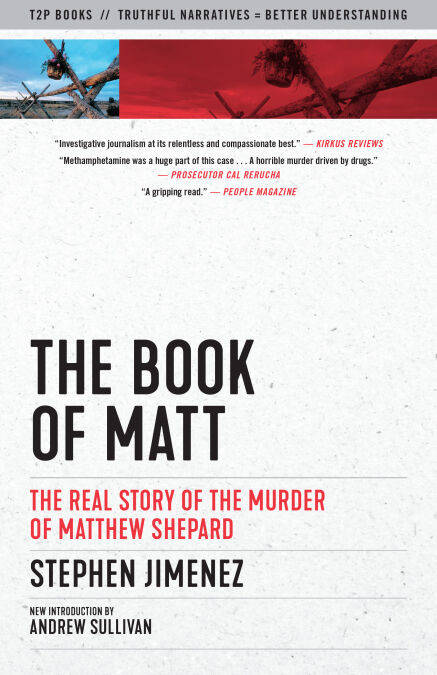
With a New Conclusion by the Author
On the night of October 6, 1998, twenty-one-year-old Matthew Shepard left a bar with two alleged “strangers,” Aaron McKinney and Russell Henderson. Eighteen hours later, Matthew was found tied to a log fence on the outskirts of town, unconscious and barely alive. Overnight, a politically expedient myth took the place of important facts. By the time Matthew died a few days later, his name was synonymous with anti-gay hate. The Book of Matt, first published in 2013, demonstrated that the truth was in fact far more complicated – and daunting. Stephen Jimenez’s account revealed primary documents that had been under seal, and gave voice to many with firsthand knowledge of the case who had not been heard from, including members of law enforcement.
In his Introduction to this updated edition, journalist Andrew Sullivan writes: “No one wanted Steve Jimenez to report this story, let alone go back and back to Laramie, Wyoming, asking awkward questions, puzzling over strange discrepancies, re-interviewing sources, seeking a deeper, more complex truth about the ghastly killing than America, it turned out, was prepared to hear. It was worse than that, actually. Not only did no one want to hear more about it, but many were incensed that the case was being re-examined at all.”
As a gay man Jimenez felt an added moral imperative to tell the story of Matthew’s murder honestly, and his reporting has been thoroughly corroborated. “I urge you to read [The Book of Matt] carefully and skeptically,” Sullivan writes, “and to see better how life rarely fits into the neat boxes we want it to inhabit. That Matthew Shepard was a meth dealer and meth user says nothing that bad about him, and in no way mitigates the hideous brutality of the crime that killed him; instead it shows how vulnerable so many are to the drug’s escapist lure and its astonishing capacity to heighten sexual pleasure so that it’s the only thing you want to live for. Shepard was a victim twice over: of meth and of a fellow meth user.”
On the night of October 6, 1998, twenty-one-year-old Matthew Shepard left a bar with two alleged “strangers,” Aaron McKinney and Russell Henderson. Eighteen hours later, Matthew was found tied to a log fence on the outskirts of town, unconscious and barely alive. Overnight, a politically expedient myth took the place of important facts. By the time Matthew died a few days later, his name was synonymous with anti-gay hate. The Book of Matt, first published in 2013, demonstrated that the truth was in fact far more complicated – and daunting. Stephen Jimenez’s account revealed primary documents that had been under seal, and gave voice to many with firsthand knowledge of the case who had not been heard from, including members of law enforcement.
In his Introduction to this updated edition, journalist Andrew Sullivan writes: “No one wanted Steve Jimenez to report this story, let alone go back and back to Laramie, Wyoming, asking awkward questions, puzzling over strange discrepancies, re-interviewing sources, seeking a deeper, more complex truth about the ghastly killing than America, it turned out, was prepared to hear. It was worse than that, actually. Not only did no one want to hear more about it, but many were incensed that the case was being re-examined at all.”
As a gay man Jimenez felt an added moral imperative to tell the story of Matthew’s murder honestly, and his reporting has been thoroughly corroborated. “I urge you to read [The Book of Matt] carefully and skeptically,” Sullivan writes, “and to see better how life rarely fits into the neat boxes we want it to inhabit. That Matthew Shepard was a meth dealer and meth user says nothing that bad about him, and in no way mitigates the hideous brutality of the crime that killed him; instead it shows how vulnerable so many are to the drug’s escapist lure and its astonishing capacity to heighten sexual pleasure so that it’s the only thing you want to live for. Shepard was a victim twice over: of meth and of a fellow meth user.”
Spécifications
Parties prenantes
- Auteur(s) :
- Editeur:
Contenu
- Nombre de pages :
- 496
- Langue:
- Anglais
- Collection :
Caractéristiques
- EAN:
- 9781586422684
- Date de parution :
- 25-05-20
- Format:
- Ebook
- Protection digitale:
- Adobe DRM
- Format numérique:
- ePub


Seulement chez Librairie Club
+ 9 points sur votre carte client de Librairie Club
Cadeau


Les avis
Nous publions uniquement les avis qui respectent les conditions requises. Consultez nos conditions pour les avis.