


- Retrait en 2 heures
- Assortiment impressionnant
- Paiement sécurisé
- Toujours un magasin près de chez vous
- Retrait en 2 heures
- Assortiment impressionnant
- Paiement sécurisé
- Toujours un magasin près de chez vous



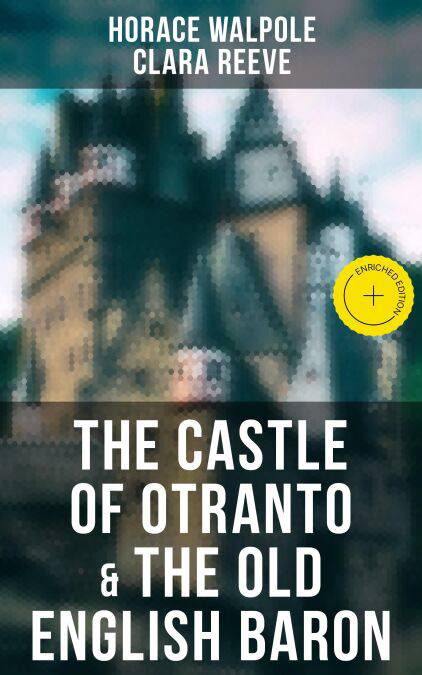
The Castle of Otranto & The Old English Baron EBOOK
Enriched edition. 2 Novels
Horace Walpole, Clara Reeve
Ebook | Anglais
0,49 €
Description
The dual works of Horace Walpole's 'The Castle of Otranto' and Clara Reeve's 'The Old English Baron' sit at the pivotal inception of the Gothic novel. This collection, combining two seminal texts, explores themes of medievalism, the supernatural, and the sublime, reflecting a period of literary experimentation that paved the way for the burgeoning Gothic genre. The anthology showcases the evolution from the bombastic, almost operatic style of Walpole to the more restrained, realistic approach favoured by Reeve, providing readers with a spectrum of Gothic transition and influence. These works are exceptional not only for their narrative intrigue but also for their historical significance as pioneers in their genre. The backgrounds of Walpole and Reeve offer insights into the early Gothic mind: an oscillation between Enlightenment rationalism and the emerging sensibility towards Romantic emotionalism. This collection exemplifies the early Gothic novel's role as a cultural artifact that mirrors its societal context, where medieval archaisms collide with—and challenge—the Moderns. Their writings, though diverse in voice, collectively forge a path that invites subsequent explorations of moral and philosophical undercurrents through the lens of gothic suspense and terror. This anthology is indispensable for aficionados and scholars alike, inviting a re-examination of the roots of the Gothic genre within these two foundational texts. It offers a unique opportunity to observe the dialogue between two contrasting yet complementary narratives that both dissect and celebrate the complexities of human emotion and the darker realms of the human psyche. Delving into its pages promises an enriching journey through the corridors of Gothic innovation—one that educates, engages, and elucidates the enduring appeal of the mysterious and the macabre.
In this enriched edition, we have carefully created added value for your reading experience:
- An Introduction draws the threads together, discussing why these diverse authors and texts belong in one collection.
- Historical Context explores the cultural and intellectual currents that shaped these works, offering insight into the shared (or contrasting) eras that influenced each writer.
- A combined Synopsis (Selection) briefly outlines the key plots or arguments of the included pieces, helping readers grasp the anthology's overall scope without giving away essential twists.
- A collective Analysis highlights common themes, stylistic variations, and significant crossovers in tone and technique, tying together writers from different backgrounds.
- Reflection questions encourage readers to compare the different voices and perspectives within the collection, fostering a richer understanding of the overarching conversation.
In this enriched edition, we have carefully created added value for your reading experience:
- An Introduction draws the threads together, discussing why these diverse authors and texts belong in one collection.
- Historical Context explores the cultural and intellectual currents that shaped these works, offering insight into the shared (or contrasting) eras that influenced each writer.
- A combined Synopsis (Selection) briefly outlines the key plots or arguments of the included pieces, helping readers grasp the anthology's overall scope without giving away essential twists.
- A collective Analysis highlights common themes, stylistic variations, and significant crossovers in tone and technique, tying together writers from different backgrounds.
- Reflection questions encourage readers to compare the different voices and perspectives within the collection, fostering a richer understanding of the overarching conversation.
Spécifications
Parties prenantes
- Auteur(s) :
- Editeur:
Contenu
- Nombre de pages :
- 212
- Langue:
- Anglais
Caractéristiques
- EAN:
- 4057664560001
- Date de parution :
- 17-12-19
- Format:
- Ebook
- Protection digitale:
- Digital watermarking
- Format numérique:
- ePub


Seulement chez Librairie Club
Cadeau


Les avis
Nous publions uniquement les avis qui respectent les conditions requises. Consultez nos conditions pour les avis.