


- Retrait en 2 heures
- Assortiment impressionnant
- Paiement sécurisé
- Toujours un magasin près de chez vous
- Retrait en 2 heures
- Assortiment impressionnant
- Paiement sécurisé
- Toujours un magasin près de chez vous



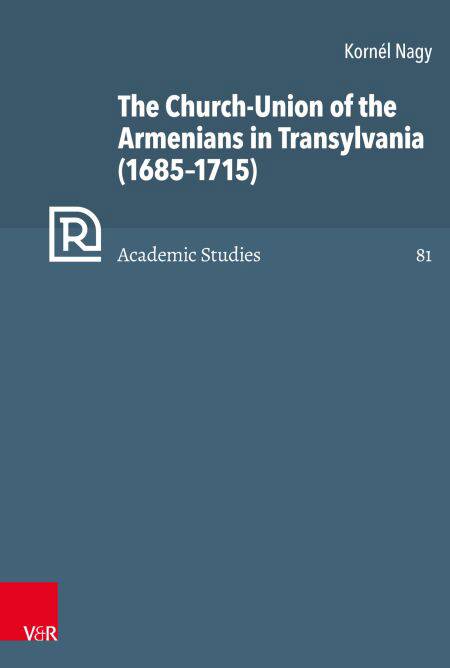
The Church-Union of the Armenians in Transylvania (1685–1715) EBOOK
Kornél Nagy
100,00 €
+ 100 points
Description
The 17th and 18th centuries have been regarded as one of the most exciting periods in the history of Hungary and Transylvania. The wars of liberation to terminate the Ottoman occupation, the integration of the Transylvanian Principality into the Habsburg Empire after 150-years' relative independence, the colonisation of the uncultivated lands during the Ottoman rule, the re-organisation of daily life and Prince Francis (Ferenc) Rákóczi's independence war (1703–1711) indicated serious challenges for the Habsburg Court in Vienna. This period (1686−1711) felled serious duties to the Hungarian Catholic Church, too. Prior to these duties, the process of Counter-Reformation in Hungary's eastern and northern regions was getting increasingly under way: Orthodox Ruthenians and Romanians in Transylvania united with the Roman Catholic Church. The bishops, who were highly supported by the missionaries delegated from Rome in order to re-organise the Hungarian Catholic Church's religious life, re-appeared at the seats of the abandoned dioceses after the 150-years' Ottoman occupation and nearly 110-years' pressure from the strong Protestantism supported by the Princes of Transylvania. The Armenians' church-union in Transylvania must be, in fact, analysed in this church-historical context. The history of Armenians in Transylvania, escaping from Moldavia and Podolia between 1668 and 1672, should be regarded practically as an undiscovered area from both the Hungarian and international church-historical point of view. The church-union of the Armenians in Transylvania is primarily associated with Bishop Oxendio Virziresco's (1654–1715), an Armenian Uniate cleric educated at Collegium Urbanum in Rome, missionary efforts. In this work, I have tried to look for evident responses to these afore-mentioned problems, resting on the partly discovered and undiscovered sources as well as analysing critically a few of secondary literature.
Spécifications
Parties prenantes
- Auteur(s) :
- Editeur:
Contenu
- Nombre de pages :
- 251
- Langue:
- Anglais
- Collection :
Caractéristiques
- EAN:
- 9783647503547
- Date de parution :
- 08-08-21
- Format:
- Ebook
- Protection digitale:
- /
- Format numérique:


Seulement chez Librairie Club
+ 100 points sur votre carte client de Librairie Club
Cadeau


Les avis
Nous publions uniquement les avis qui respectent les conditions requises. Consultez nos conditions pour les avis.