


- Retrait en 2 heures
- Assortiment impressionnant
- Paiement sécurisé
- Toujours un magasin près de chez vous
- Retrait en 2 heures
- Assortiment impressionnant
- Paiement sécurisé
- Toujours un magasin près de chez vous



63,35 €
+ 126 points
Description
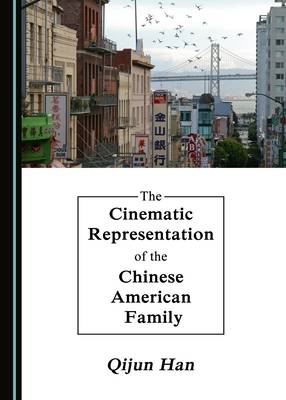
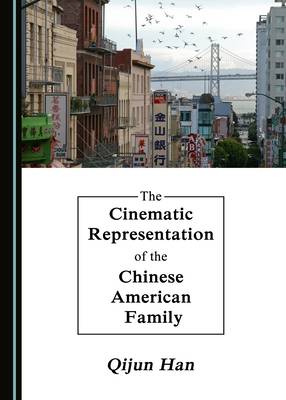
There has been an increasing recognition of the fluidity and ambiguity of ethnic identities within the context of global mobility. With that in mind, how have films constructed the identity of ethnic Chinese in the United States? This book addresses this issue through three sub-questions. First, why is the family narrative so characteristic of films about Chinese Americans in transnational Chinese cinema? In other words, how and why are images of Chinese or Chinese Americans in transnational Chinese cinema different from those in Hollywood movies? Second, how does transnational Chinese cinema define and negotiate the aesthetic conventions of melodrama commonly used to depict Chinese American families? In terms of establishing melodrama as an evolving mode of, how does Chinese American cinema historically connect with both Hollywood and Chinese cinema? Third, what have the narrative treatments of Chinese American families in transnational Chinese cinema contributed to the ongoing representation of Chinese culture and construction of ethnic Chinese identities in Western societies? This book traverses fields such as cultural studies, Chinese studies, media studies, American studies, and film studies, and engages with a select corpus of films from the 1990s to the 2000s, directed by Chinese American, Taiwanese and Hong Kong filmmakers and produced in the USA, Taiwan, Hong Kong and mainland China, to analyze the role the American Chinese family plays in their work. With sensitivity towards transnational bonds and historical processes, a negotiation process of three sets of conflicting forces has subsequently emerged: the traditional and the modern, the national and the transnational, and Chinese American identity crisis in favor of a Chinese identity or a true American identity. Contrasting cultural beliefs undoubtedly create cross-cultural and generational conflicts within the family, yet also open the way to negotiation and compromise. This research on the cinematic depiction of Chinese Americans reveals the historically significant transnational connection among Chinese American, Chinese, and American cultures. On the one hand, ethnic Chinese are represented by boundaries that establish and define the Chinese American community against other communities, and yet, on the other hand, the representation of family life and structure of Chinese immigrants is multiple and fluid, as culture itself is unstable and uncertain. Therefore, a process of fixation and a process of fluidity seem to take place at the same time.
Spécifications
Parties prenantes
- Auteur(s) :
- Editeur:
Contenu
- Nombre de pages :
- 290
- Langue:
- Anglais
Caractéristiques
- EAN:
- 9781443888820
- Date de parution :
- 21-03-16
- Format:
- Livre relié
- Format numérique:
- Genaaid
- Dimensions :
- 152 mm x 203 mm
- Poids :
- 453 g


Seulement chez Librairie Club
+ 126 points sur votre carte client de Librairie Club
Cadeau


Les avis
Nous publions uniquement les avis qui respectent les conditions requises. Consultez nos conditions pour les avis.