


- Retrait en 2 heures
- Assortiment impressionnant
- Paiement sécurisé
- Toujours un magasin près de chez vous
- Retrait en 2 heures
- Assortiment impressionnant
- Paiement sécurisé
- Toujours un magasin près de chez vous



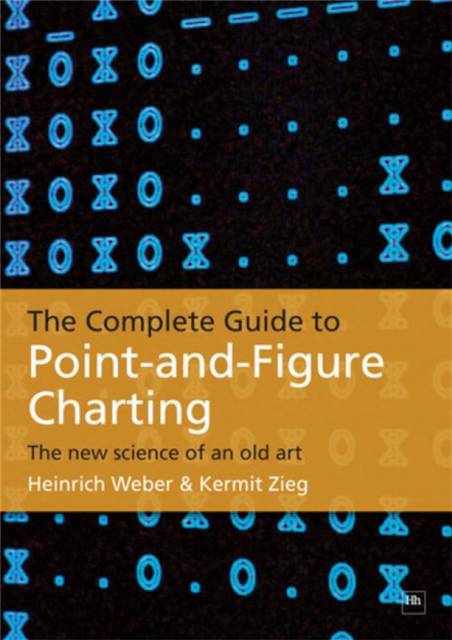
The Complete Guide to Point-And-Figure Charting
The New Science of an Old Art
Heinrich Weber, Kermit Zieg
Livre broché | Anglais
69,45 €
+ 138 points
Description
The aim of this book is to explain point-and-figure charting to European investors and traders, and to show why it is the most reliable technical tool for timing entry and exit points in stocks, indices and other securities. The book is written for all levels of trader, from the novice to the experienced. It starts by explaining the basics of point-and-figure, and by showing its advantages over other types of chart. Readers are then given step-by-step instructions on how to start a point-and-figure chart from simple price data, and how to add to it day-by-day using simple rules based on end of day highs and lows. The emphasis is on simplicity and clarity. The section on chart interpretation introduces the basic buy and sell signals, and goes on to explain the more complex signals, in each case illustrating the pattern, and the precise entry and exit points, with colour charts from FTSE stocks and indices. It also shows how trend lines are incorporated into a chart. The latest point-and-figure trading techniques are covered in depth. The authors show how to: use horizontal and vertical counts to estimate the size of price moves, use stop-orders to protect positions, use pyramiding to maximise profitable trends, and use swing trading in combination with p&f. They also show how to adapt your trading style to the amount of capital you have available and to your risk tolerance. In the later sections of the book, the authors concentrate on optimisation of p&f trading and the avoidance of the most common trap - 'over-fitting' - and on analysis of the profitability of p&f trading. They demonstrate conclusively that point and figure, correctly applied, produces consistent and reliable profits across a variety of markets. In summary, Heinrich Weber & Kermit Zieg's book is the definitive guide to the theory and application of point-and-figure charting. It is especially welcome for UK and European traders, since it uses recent charts of FTSE and European securities as examples, and includes hitherto unpublished research on p&f's applicability to European securities.
Spécifications
Parties prenantes
- Auteur(s) :
- Editeur:
Contenu
- Nombre de pages :
- 264
- Langue:
- Anglais
Caractéristiques
- EAN:
- 9781897597286
- Date de parution :
- 30-09-2003
- Format:
- Livre broché
- Format numérique:
- Trade paperback (VS)
- Dimensions :
- 189 mm x 245 mm
- Poids :
- 739 g


Seulement chez Librairie Club
+ 138 points sur votre carte client de Librairie Club
Cadeau


Les avis
Nous publions uniquement les avis qui respectent les conditions requises. Consultez nos conditions pour les avis.