


En raison d'une grève chez bpost, des retards de livraison peuvent survenir. Besoin de quelque chose en urgence ? Optez pour un retrait en magasin ou rendez-vous dans une Librairie Club à proximité.
- Retrait en 2 heures
- Assortiment impressionnant
- Paiement sécurisé
- Toujours un magasin près de chez vous
En raison d'une grève chez bpost, des retards de livraison peuvent survenir. Besoin de quelque chose en urgence ? Optez pour un retrait en magasin ou rendez-vous dans une Librairie Club à proximité.
- Retrait en 2 heures
- Assortiment impressionnant
- Paiement sécurisé
- Toujours un magasin près de chez vous


Description
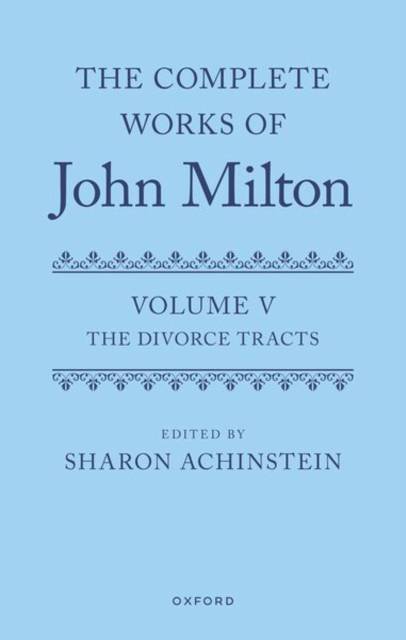
The four prose tracts Milton published between August 1643 and March 1645 on the subject of divorce constitute an underappreciated body of work in the great writer's canon. They are almost an embarrassment: that the poet of 'wedded love' in the wreathing lines of Paradise Lost should be drawn again and again to this disheartening topic. Yet Milton argued so hard for divorce because he believed marriage to be a valuable thing: his innovation was to suggest that couples could be separated on the grounds of incompatibility. In putting human happiness first, Milton's writings herald a revolution in thought, not only about marriage, but about earthly life and, indeed, all human relationships. Through an encounter with these troubled writings, it is possible to understand the makings of a great poet and thinker in the fiery conflicts of civil war and intellectual revolution. For these works, the author fell afoul of authorities and came under state investigation, sealing his commitment to freedom of thought. This new edition makes use of, and advances, recent textual and critical scholarship of these texts to contribute to a greater understanding of his genius and that of his age. Milton's texts are set in the processes of their material production, their entanglements with politics, philosophy, theology, their literary technique, and their printing and reception history. New findings are presented concerning these texts, with a careful reconstruction of work done by Milton and his printers in the printing houses, with meanings of variants and revisions understood more clearly than hitherto. The topic of marriage, it is shown, touches on matters vital to early modern state building, in the reform of religion and civil polity. The aim of this new edition is to represent Milton's ideas and the production of these texts in the Introduction and annotations, where the wide literary, political, and intellectual engagements, and not just the man, will be seen in a clearer light. These tracts, as can be seen, are part of mainstream English and European political and religious debate over the purpose and nature of earthly life, and not only the singular output of a broken-hearted husband.
Spécifications
Parties prenantes
- Auteur(s) :
- Editeur:
Contenu
- Nombre de pages :
- 688
- Langue:
- Anglais
- Collection :
Caractéristiques
- EAN:
- 9780199234493
- Date de parution :
- 26-06-26
- Format:
- Livre relié
- Format numérique:
- Genaaid
- Dimensions :
- 147 mm x 223 mm
- Poids :
- 943 g


Seulement chez Librairie Club
+ 537 points sur votre carte client de Librairie Club
Cadeau


Les avis
Nous publions uniquement les avis qui respectent les conditions requises. Consultez nos conditions pour les avis.