


- Retrait en 2 heures
- Assortiment impressionnant
- Paiement sécurisé
- Toujours un magasin près de chez vous
- Retrait gratuit dans votre magasin Club
- 7.000.0000 titres dans notre catalogue
- Payer en toute sécurité
- Toujours un magasin près de chez vous


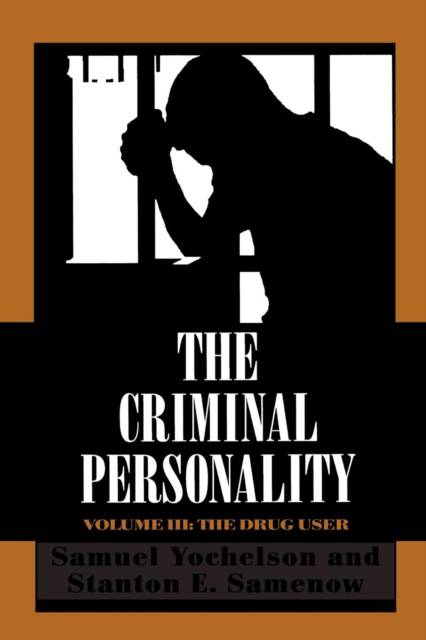
The Criminal Personality
The Drug User, Volume III
Samuel Yochelson, Stanton Samenow
Livre broché | Anglais
152,95 €
+ 305 points
Format
Description
'The third in a series explicating the criminal mind, this volume summarizes observations, interpretations, and conclusions derived from a study of 121 criminal men who used drugs and/or alcohol to excess. Originally set in writing by Yochelson before his death in 1976, the materials were edited and updated by Samenow for publication. Systematic, probing and repeated interviews were used as the vehicle for gathering information on common mental themes among men apprehended and sentenced for criminal acts.... Yochelson and Samenow attribute crime to a series of early irresponsible choices that predate drug use among drug-using criminals. Personality and personal choice variables are conceptualized as critical in initialing and maintaining use. In what is called an indiscriminate search for excitement, drug-using criminals are characterized as expanding their criminal repertoire while excusing their actions by rationalizations sometimes invented by sociologists, psychologists, and psychiatrists. Although these ideas are of considerable interest, the real value of the text lies in its intriguing presentation of drug-user thinking. Specifically, three chapters are well worth reading. The description of mental activities associated with such constructs as 'the high, ' 'the nod, ' and 'the rush' are probably on target for many drug users, whether criminal or not. The chapter explaining drugs as facilitators offers several notions worthy of systematic inquiry, as does the one devoted to principles for encouragement of behavior change. Of perhaps greatest benefit to most readers are caveats regarding management of drug users in what may be seen as a cognitive-behavioral framework. Yochelson and Samenow contend that drug-using criminal men represent the architects of their criminal life-styles and that it is they themselves who can correct irresponsible thoughts and behaviors through application of logic over emotion.' DContemporary Psychology A Jason Aroson Book
Spécifications
Parties prenantes
- Auteur(s) :
- Editeur:
Contenu
- Nombre de pages :
- 384
- Langue:
- Anglais
Caractéristiques
- EAN:
- 9781568212449
- Date de parution :
- 01-04-00
- Format:
- Livre broché
- Format numérique:
- Trade paperback (VS)
- Dimensions :
- 152 mm x 209 mm
- Poids :
- 594 g


Seulement chez Librairie Club
+ 305 points sur votre carte client de Librairie Club
Cadeau

Cadeau


Les avis
Nous publions uniquement les avis qui respectent les conditions requises. Consultez nos conditions pour les avis.