


- Retrait en 2 heures
- Assortiment impressionnant
- Paiement sécurisé
- Toujours un magasin près de chez vous
- Retrait en 2 heures
- Assortiment impressionnant
- Paiement sécurisé
- Toujours un magasin près de chez vous



1,99 €
+ 1 points
Format
Description
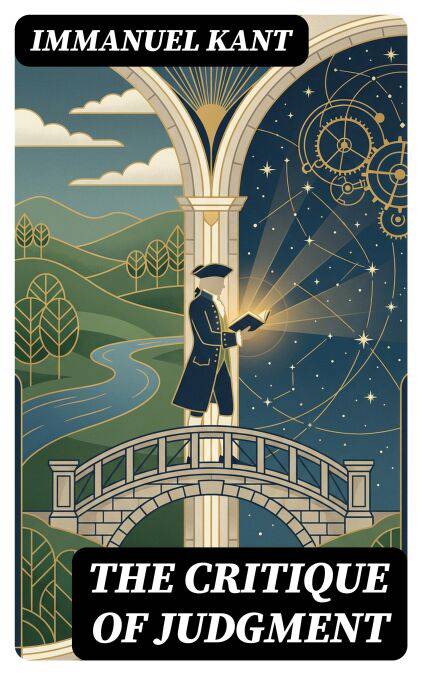
In "The Critique of Judgment," Immanuel Kant meticulously explores the intricate relationship between aesthetics and teleology, positioning judgment as a critical faculty that bridges the domains of the sublime and the beautiful. This seminal work is divided into two main sections, the Critique of Aesthetic Judgment and the Critique of Teleological Judgment, offering profound insights into the nature of human perception and the principles governing our appreciation of art and nature. Kant employs a distinctive philosophical style, combining rigorous analysis with eloquent prose, reflecting the Enlightenment's quest for objectivity and universality amidst subjective experiences. Immanuel Kant, a central figure in modern Western philosophy, was significantly influenced by the Enlightenment ideals of reason and freedom. Writing "The Critique of Judgment" in 1790, he sought to bridge the gap between empiricist and rationalist thought, examining how aesthetic values and notions of purpose resonate within human consciousness. Kant's rich intellectual heritage, including his engagement with the works of Rousseau and Hume, profoundly shaped his inquiries into the aesthetic and teleological dimensions of human experience. This book is essential for those interested in philosophy, art, and science, offering a fundamental understanding of how we evaluate and appreciate beauty and purpose. Readers will find Kant's reflections not only intellectually stimulating but also highly relevant to contemporary discussions surrounding aesthetics and the nature of judgment.
In this enriched edition, we have carefully created added value for your reading experience:
- A succinct Introduction situates the work's timeless appeal and themes.
- The Synopsis outlines the central plot, highlighting key developments without spoiling critical twists.
- A detailed Historical Context immerses you in the era's events and influences that shaped the writing.
- An Author Biography reveals milestones in the author's life, illuminating the personal insights behind the text.
- A thorough Analysis dissects symbols, motifs, and character arcs to unearth underlying meanings.
- Reflection questions prompt you to engage personally with the work's messages, connecting them to modern life.
- Hand‐picked Memorable Quotes shine a spotlight on moments of literary brilliance.
- Interactive footnotes clarify unusual references, historical allusions, and archaic phrases for an effortless, more informed read.
In this enriched edition, we have carefully created added value for your reading experience:
- A succinct Introduction situates the work's timeless appeal and themes.
- The Synopsis outlines the central plot, highlighting key developments without spoiling critical twists.
- A detailed Historical Context immerses you in the era's events and influences that shaped the writing.
- An Author Biography reveals milestones in the author's life, illuminating the personal insights behind the text.
- A thorough Analysis dissects symbols, motifs, and character arcs to unearth underlying meanings.
- Reflection questions prompt you to engage personally with the work's messages, connecting them to modern life.
- Hand‐picked Memorable Quotes shine a spotlight on moments of literary brilliance.
- Interactive footnotes clarify unusual references, historical allusions, and archaic phrases for an effortless, more informed read.
Spécifications
Parties prenantes
- Auteur(s) :
- Traducteur(s):
- Editeur:
Contenu
- Nombre de pages :
- 423
- Langue:
- Anglais
Caractéristiques
- EAN:
- 8596547008385
- Date de parution :
- 16-05-22
- Format:
- Ebook
- Protection digitale:
- Digital watermarking
- Format numérique:
- ePub



Seulement chez Librairie Club
+ 1 points sur votre carte client de Librairie Club
Cadeau


Les avis
Nous publions uniquement les avis qui respectent les conditions requises. Consultez nos conditions pour les avis.