

- Retrait en 2 heures
- Assortiment impressionnant
- Paiement sécurisé
- Toujours un magasin près de chez vous
- Retrait gratuit dans votre magasin Club
- 7.000.0000 titres dans notre catalogue
- Payer en toute sécurité
- Toujours un magasin près de chez vous

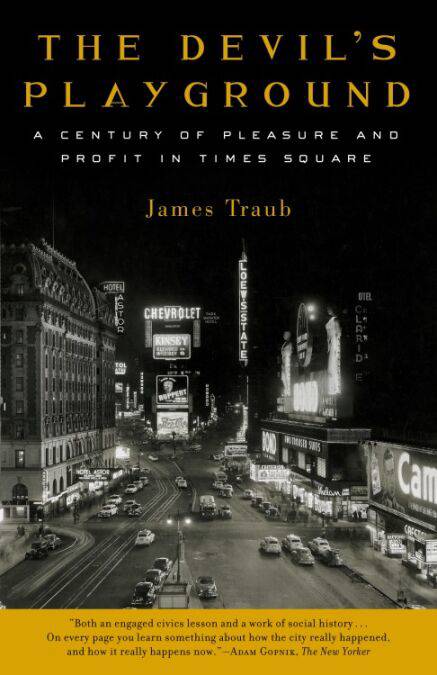
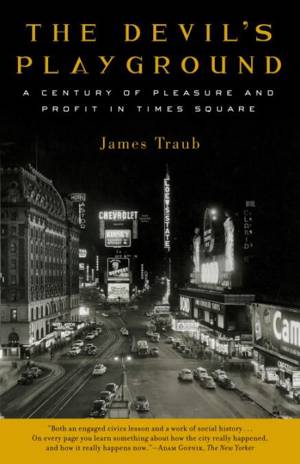
The Devil's Playground EBOOK
A Century of Pleasure and Profit in Times Square
James Traub
Ebook | Anglais
6,93 €
+ 6 points
Description
As Times Square turns 100, New York Times Magazine contributing writer James Traub tells the story of how this mercurial district became one of the most famous and exciting places in the world. The Devil’s Playground is classic and colorful American history, from the first years of the twentieth century through the Runyonesque heyday of nightclubs and theaters in the 1920s and ’30s, to the district’s decline in the 1960s and its glittering corporate revival in the 1990s.
First, Traub gives us the great impresarios, wits, tunesmiths, newspaper columnists, and nocturnal creatures who shaped Times Square over the century since the place first got its name: Oscar Hammerstein, Florenz Ziegfeld, George S. Kaufman, Damon Runyon, Walter Winchell, and “the Queen of the Nightclubs,” Texas Guinan; bards like A. J. Liebling, Joe Mitchell, and the Beats, who celebrated the drug dealers and pimps of 42nd Street. He describes Times Square’s notorious collapse into pathology and the fierce debates over how best to restore it to life.
Traub then goes on to scrutinize today’s Times Square as no author has yet done. He writes about the new 42nd Street, the giant Toys “R” Us store with its flashing Ferris wheel, the new world of corporate theater, and the sex shops trying to leave their history behind.
More than sixty years ago, Liebling called Times Square “the heart of the world”—not just the center of the world, though this crossroads in Midtown Manhattan was indeed that, but its heart. From the dawn of the twentieth century through the 1950s, Times Square was the whirling dynamo of American popular culture and, increasingly, an urban sanctuary for the eccentric and the untamed. The name itself became emblematic of the tremendous life force of cities everywhere.
Today, Times Square is once again an awe-inspiring place, but the dark and strange corners have been filled with blazing light. The most famous street character on Broadway, “the Naked Cowboy,” has his own website, and Toys “R” Us calls its flagship store in Times Square “the toy center of the universe.” For the giant entertainment corporations that have moved to this safe, clean, and self-consciously gaudy spot, Times Square is still very much the center of the world. But is it still the heart?
First, Traub gives us the great impresarios, wits, tunesmiths, newspaper columnists, and nocturnal creatures who shaped Times Square over the century since the place first got its name: Oscar Hammerstein, Florenz Ziegfeld, George S. Kaufman, Damon Runyon, Walter Winchell, and “the Queen of the Nightclubs,” Texas Guinan; bards like A. J. Liebling, Joe Mitchell, and the Beats, who celebrated the drug dealers and pimps of 42nd Street. He describes Times Square’s notorious collapse into pathology and the fierce debates over how best to restore it to life.
Traub then goes on to scrutinize today’s Times Square as no author has yet done. He writes about the new 42nd Street, the giant Toys “R” Us store with its flashing Ferris wheel, the new world of corporate theater, and the sex shops trying to leave their history behind.
More than sixty years ago, Liebling called Times Square “the heart of the world”—not just the center of the world, though this crossroads in Midtown Manhattan was indeed that, but its heart. From the dawn of the twentieth century through the 1950s, Times Square was the whirling dynamo of American popular culture and, increasingly, an urban sanctuary for the eccentric and the untamed. The name itself became emblematic of the tremendous life force of cities everywhere.
Today, Times Square is once again an awe-inspiring place, but the dark and strange corners have been filled with blazing light. The most famous street character on Broadway, “the Naked Cowboy,” has his own website, and Toys “R” Us calls its flagship store in Times Square “the toy center of the universe.” For the giant entertainment corporations that have moved to this safe, clean, and self-consciously gaudy spot, Times Square is still very much the center of the world. But is it still the heart?
Spécifications
Parties prenantes
- Auteur(s) :
- Editeur:
Contenu
- Nombre de pages :
- 336
- Langue:
- Anglais
Caractéristiques
- EAN:
- 9780307432131
- Date de parution :
- 17-12-07
- Format:
- Ebook
- Protection digitale:
- Adobe DRM
- Format numérique:
- ePub


Seulement chez Librairie Club
+ 6 points sur votre carte client de Librairie Club
Cadeau

Cadeau


Les avis
Nous publions uniquement les avis qui respectent les conditions requises. Consultez nos conditions pour les avis.