


- Retrait en 2 heures
- Assortiment impressionnant
- Paiement sécurisé
- Toujours un magasin près de chez vous
- Retrait gratuit dans votre magasin Club
- 7.000.0000 titres dans notre catalogue
- Payer en toute sécurité
- Toujours un magasin près de chez vous



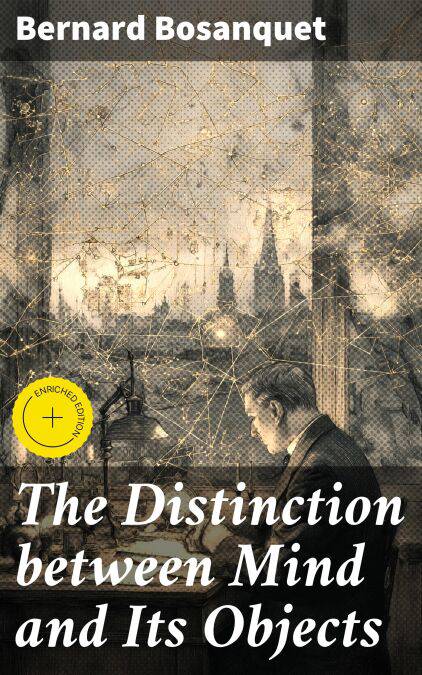
The Distinction between Mind and Its Objects EBOOK
Enriched edition. Exploring the Essence of Reality and Consciousness
Bernard Bosanquet
Ebook | Anglais
0,49 €
Format
Description
In "The Distinction between Mind and Its Objects," Bernard Bosanquet presents a profound exploration of the interplay between consciousness and the external world. Through a rigorous examination of idealism, Bosanquet intricately analyzes the relationship between perception and the objects of thought, arguing against the simplistic dualism that reduces understanding to mere subjective experience. His literary style, steeped in philosophical rigor yet accessible to the reader, engages with key figures in epistemology, situating his work within the broader context of late Victorian thought and the burgeoning dialogues emerging from German idealism. Bosanquet, a prominent figure in the British idealist movement, was deeply influenced by the philosophical currents of his time, including the works of Hegel and F.H. Bradley. His academic background at Oxford and his role at various educational institutions shaped his commitment to addressing fundamental philosophical questions about the nature of reality and our perception of it. This book reflects Bosanquet's desire to reconcile the limitations of individual experience with a more cohesive understanding of the world around us. Ideal for scholars and students of philosophy alike, "The Distinction between Mind and Its Objects" invites readers to delve into the complexities of human thought and existence. Bosanquet's intricate arguments and depth of insight will challenge and enrich one's understanding of the nature of reality, making it an essential addition to both personal and academic libraries.
In this enriched edition, we have carefully created added value for your reading experience:
- A succinct Introduction situates the work's timeless appeal and themes.
- The Synopsis outlines the central plot, highlighting key developments without spoiling critical twists.
- A detailed Historical Context immerses you in the era's events and influences that shaped the writing.
- A thorough Analysis dissects symbols, motifs, and character arcs to unearth underlying meanings.
- Reflection questions prompt you to engage personally with the work's messages, connecting them to modern life.
- Hand‐picked Memorable Quotes shine a spotlight on moments of literary brilliance.
- Interactive footnotes clarify unusual references, historical allusions, and archaic phrases for an effortless, more informed read.
In this enriched edition, we have carefully created added value for your reading experience:
- A succinct Introduction situates the work's timeless appeal and themes.
- The Synopsis outlines the central plot, highlighting key developments without spoiling critical twists.
- A detailed Historical Context immerses you in the era's events and influences that shaped the writing.
- A thorough Analysis dissects symbols, motifs, and character arcs to unearth underlying meanings.
- Reflection questions prompt you to engage personally with the work's messages, connecting them to modern life.
- Hand‐picked Memorable Quotes shine a spotlight on moments of literary brilliance.
- Interactive footnotes clarify unusual references, historical allusions, and archaic phrases for an effortless, more informed read.
Spécifications
Parties prenantes
- Auteur(s) :
- Editeur:
Contenu
- Nombre de pages :
- 36
- Langue:
- Anglais
Caractéristiques
- EAN:
- 4064066444068
- Date de parution :
- 10-04-21
- Format:
- Ebook
- Protection digitale:
- Digital watermarking
- Format numérique:
- ePub


Seulement chez Librairie Club
Cadeau

Cadeau


Les avis
Nous publions uniquement les avis qui respectent les conditions requises. Consultez nos conditions pour les avis.