


- Retrait en 2 heures
- Assortiment impressionnant
- Paiement sécurisé
- Toujours un magasin près de chez vous
- Retrait gratuit dans votre magasin Club
- 7.000.0000 titres dans notre catalogue
- Payer en toute sécurité
- Toujours un magasin près de chez vous


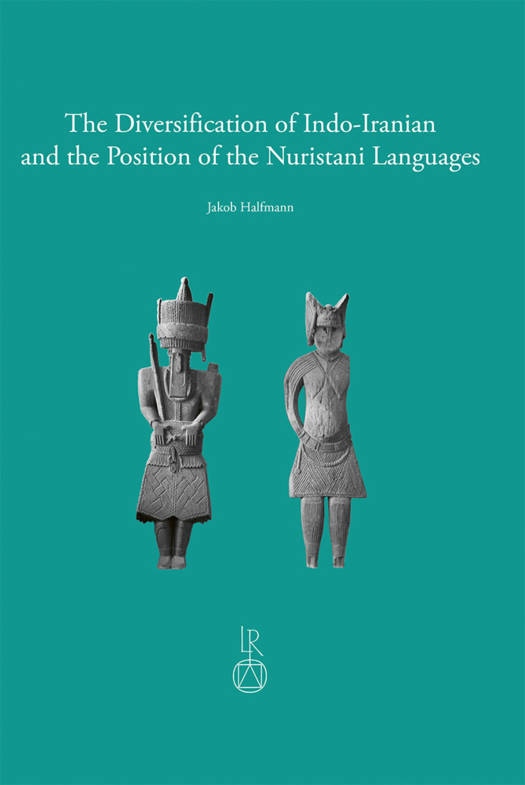
The Diversification of Indo-Iranian and the Position of the Nuristani Languages
Jakob Martin Halfmann
72,95 €
+ 145 points
Description
English summary: This book addresses an unresolved but important issue within Indo-European and Indo-Iranian historical linguistics: the genealogical classification of the Nuristani languages. This small group of closely related languages is spoken in the eastern Hindu Kush on the border between Afghanistan and Pakistan and forms a third lineage of uncertain classification within the Indo-Iranian language family, alongside Iranian and Indo-Aryan. Based on a reflection on theoretical models of linguistic diversification, a systematic, comparative analysis of the features that characterize the established subgroups of Indo-Iranian is presented. Subsequently, the historical characteristics of the Nuristani group are thoroughly examined, with a focus on the isoglosses most relevant to classification. A central feature of the work is the inclusion of previously rarely used lexical resources: In addition to classic reference works from the 20th century, more recent fieldwork data and publications by native-speaker authors from Afghanistan and Pakistan are included in the analysis. The study thus uses the most complete and reliable set of data available to date to reassess the genealogical affiliation of the Nuristan languages. The analysis suggests that the Nuristani languages are historically more closely related to Iranian than to Indo-Aryan, but that they separated from the Iranian continuum early on and were subsequently subject to strong Indo-Aryan contact influences, which particularly shaped their lexicon and typological characteristics. This publication is relevant for Indo-European and Indo-Iranian historical linguistics, as well as for anyone interested in language change, language contact, and genealogical classification in complex sociolinguistic spaces. It contributes to a more nuanced understanding of a previously little-understood language group. German description: Dieses Buch widmet sich einem bislang ungelosten, aber zentralen Thema innerhalb der indogermanischen und indoiranischen historischen Linguistik: der genealogischen Klassifikation der Nuristan-Sprachen. Diese kleine Gruppe eng verwandter Sprachen wird im ostlichen Hindukusch an der afghanisch-pakistanischen Grenze gesprochen und bildet innerhalb der indo-iranischen Sprachfamilie eine nicht eindeutig zugeordnete dritte Abstammungslinie neben dem Iranischen und dem Indoarischen. Auf der Grundlage einer Reflexion theoretischer Modelle sprachlicher Diversifikation erfolgt eine systematische, vergleichende Analyse der Merkmale, die die etablierten Untergruppen des Indoiranischen charakterisieren. Daraufhin werden die historischen Eigenschaften der Nuristani-Gruppe umfassend untersucht, mit einem Schwerpunkt auf den fur die Klassifikation relevantesten Isoglossen. Ein zentrales Merkmal der Arbeit liegt in der Einbeziehung bislang kaum genutzter lexikalischer Ressourcen: Neben den klassischen Referenzwerken aus dem 20. Jahrhundert werden aktuellere Feldforschungsdaten und Publikationen muttersprachlicher Autoren aus Afghanistan und Pakistan berucksichtigt. Die Studie nutzt somit die bislang vollstandigste und fundierteste Datengrundlage fur eine Neubewertung der genealogischen Zugehorigkeit der Nuristan-Sprachen. Die Analyse legt nahe, dass die Nuristani-Sprachen historisch enger mit dem Iranischen als mit dem Indo-Arischen verwandt sind, sich jedoch fruh vom iranischen Kontinuum losten und in der Folgezeit unter starken indoarischen Kontakteinflussen standen, die insbesondere das Lexikon und die typologischen Eigenschaften stark gepragt haben. Die Publikation ist relevant fur die indogermanische und indoiranische historische Sprachwissenschaft, sowie fur alle, die sich fur Sprachwandel, Sprachkontakt und genealogische Klassifikation in komplexen soziolinguistischen Raumen interessieren. Sie leistet einen Beitrag zur differenzierten Erschliessung einer bislang nur unzureichend verstandenen Sprachgruppe.
Spécifications
Parties prenantes
- Auteur(s) :
- Editeur:
Contenu
- Nombre de pages :
- 160
- Langue:
- Allemand, Anglais
- Collection :
Caractéristiques
- EAN:
- 9783752009125
- Date de parution :
- 17-11-25
- Format:
- Livre relié
- Format numérique:
- Genaaid
- Dimensions :
- 170 mm x 240 mm
- Poids :
- 417 g


Seulement chez Librairie Club
+ 145 points sur votre carte client de Librairie Club
Cadeau

Cadeau


Les avis
Nous publions uniquement les avis qui respectent les conditions requises. Consultez nos conditions pour les avis.